Day 1: Windhoek
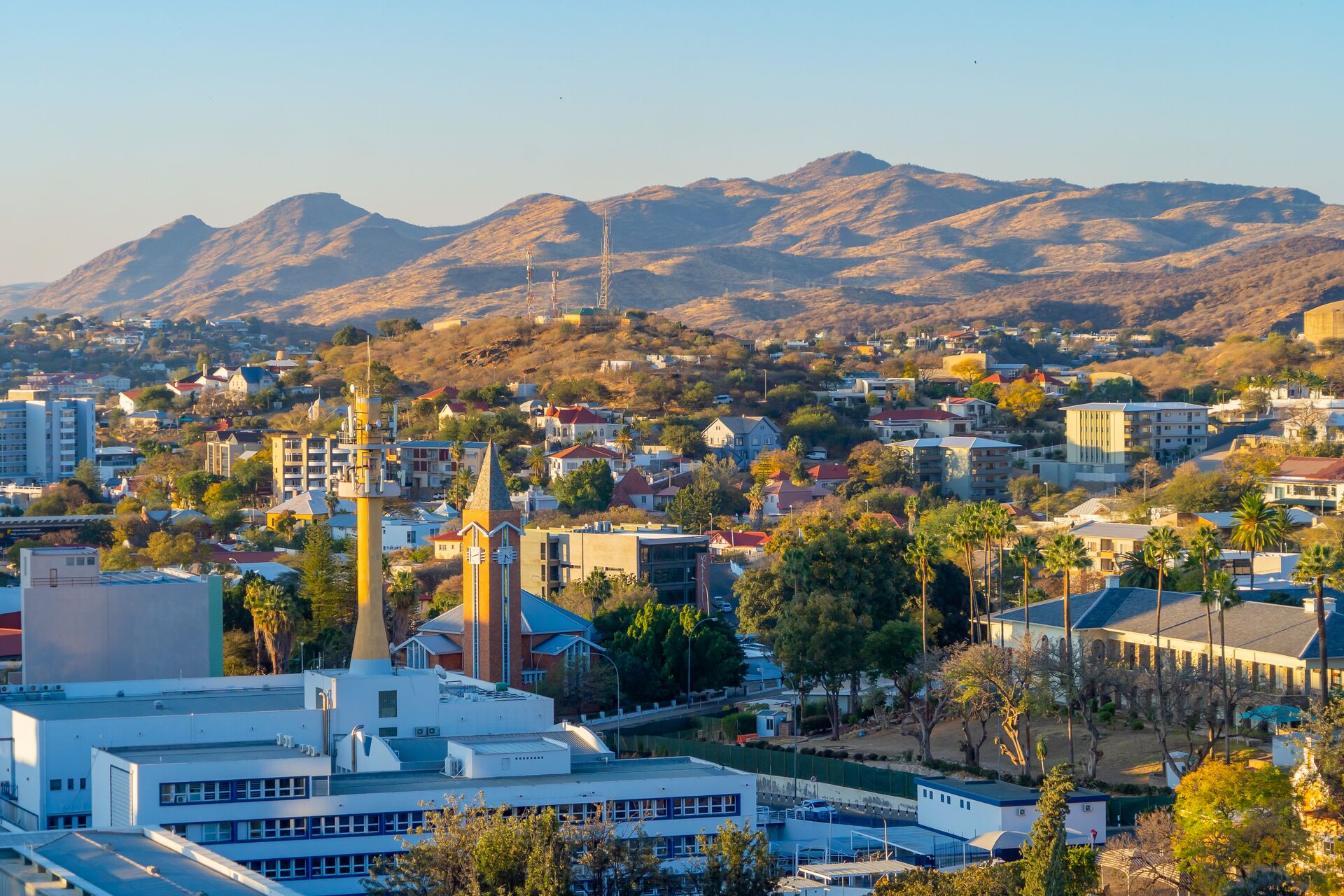
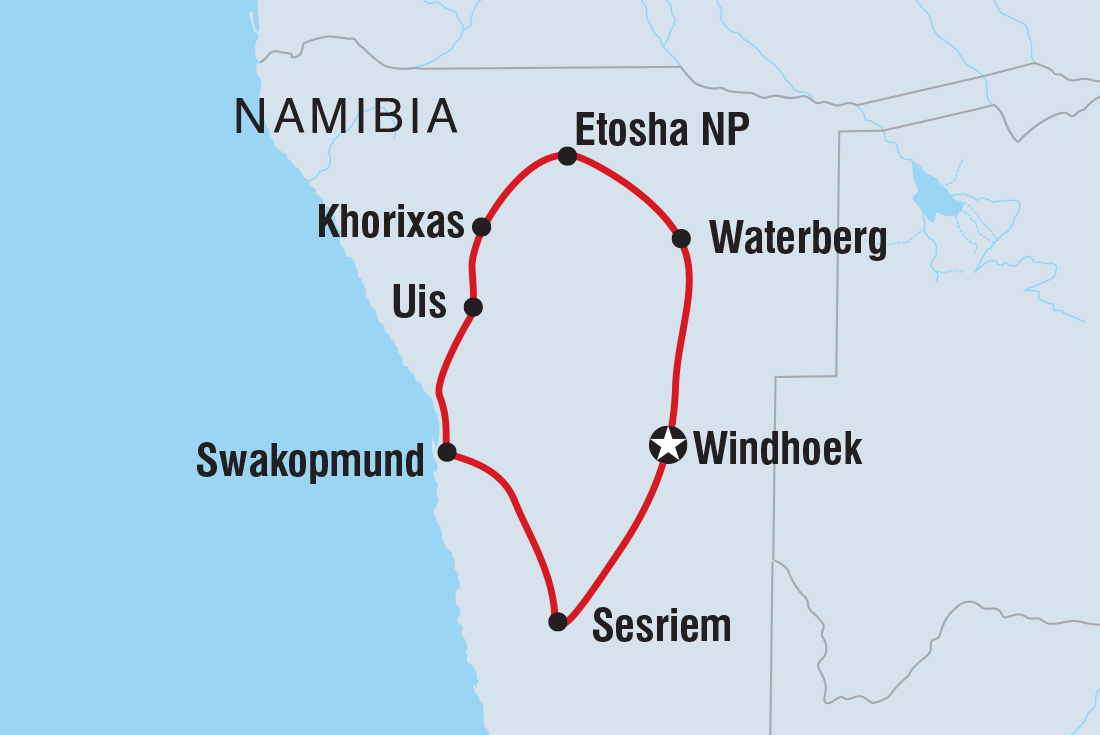
Oshi li nawa! Welcome to Namibia. Your adventure begins in the capital, Windhoek, known for its German architecture including the Tintenpalast (parliament) and Christuskirche buildings. You'll have a welcome meeting at 6 pm to meet your local leader and fellow travellers. After the meeting, why not head out to a local restaurant and get to know your group over dinner – your leader will have all the best recommendations.
Day 2: Waterberg
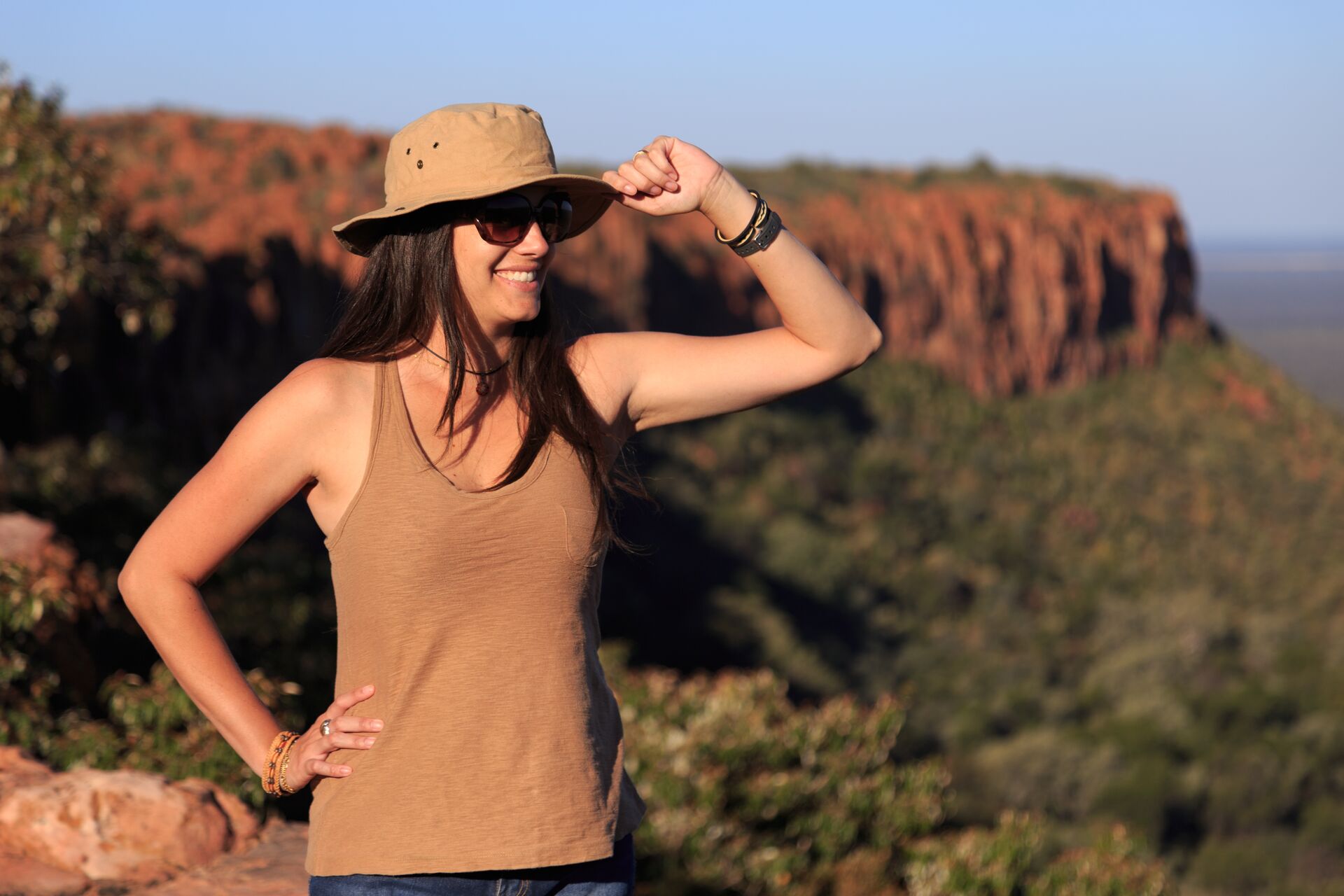
Leave Windhoek this morning and travel north to Waterberg Wilderness – a private nature reserve located at the foot of the Waterberg Plateau. The plateau stretches up to a height of 200 m and is 50 km long. When you arrive, head out on a nature walk along one of the reserve’s trails. Winding through the valley and over the slopes of the plateau, you’ll make stops at viewpoints along the way and learn about the springs, wildlife and flora that make up this ecosystem. Stroll through the Botanical Garden where you can learn about the 500 or so species of plants on the plateau and its surrounds, including fig trees, camel thorn trees and leadwood trees.
Day 3: Etosha National Park
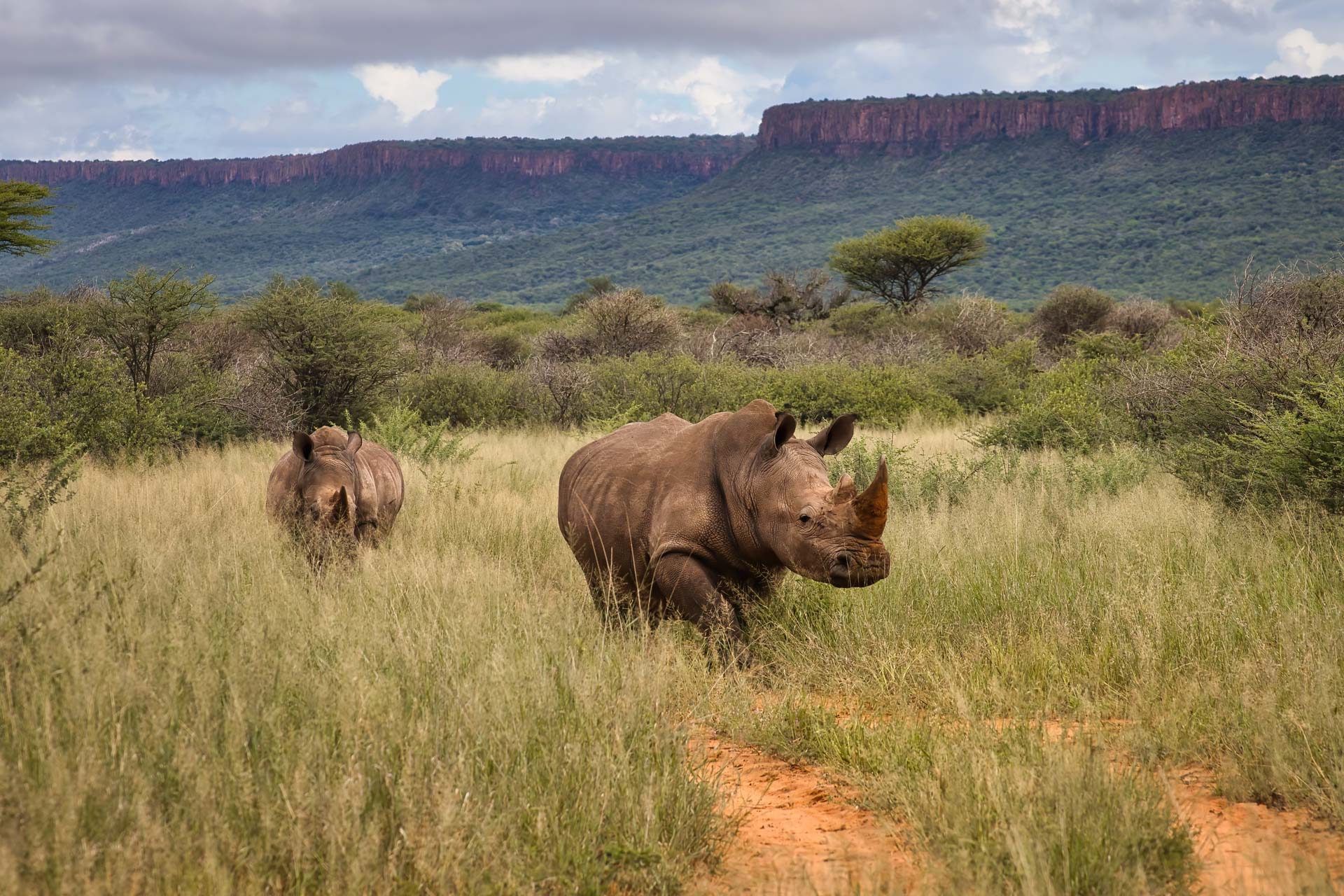
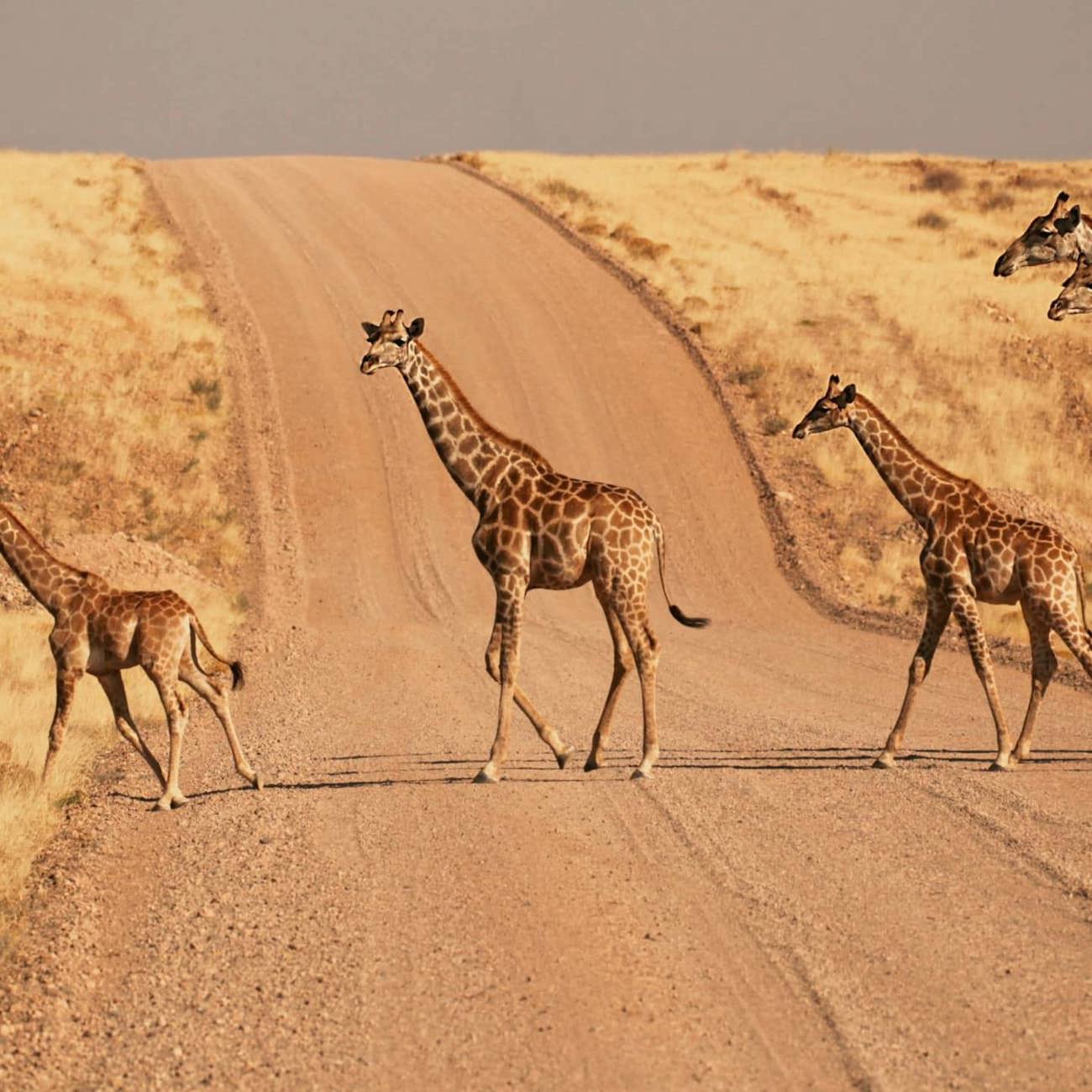
This morning, head out into the Waterberg reserve with an experienced guide in search of rhinos. As you explore, keep an eye out for giraffes, kudu, oryx, eland, blue wildebeest and red hartebeest as well. Then, say goodbye to Waterberg and drive north, headed for Etosha National Park. This is one of the best spots for wildlife viewing in Namibia. Spanning more than 20,000 sq km, more than 114 mammal species and 340 bird species can be found here. This afternoon, you can opt to go on a 4WD safari to start exploring the national park and catch your first glimpse of the diversity of wildlife that calls this place home.
Day 4: Etosha National Park
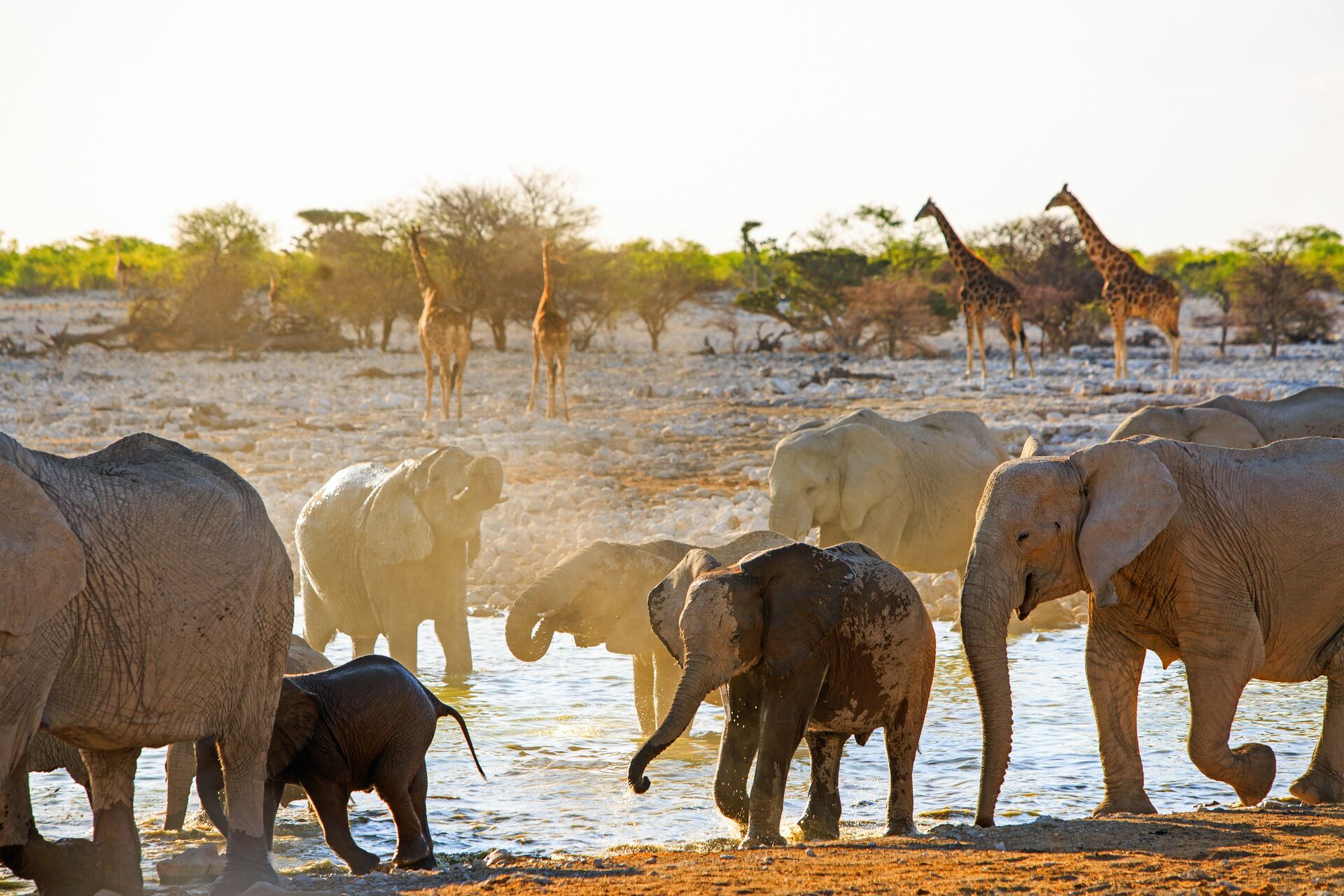
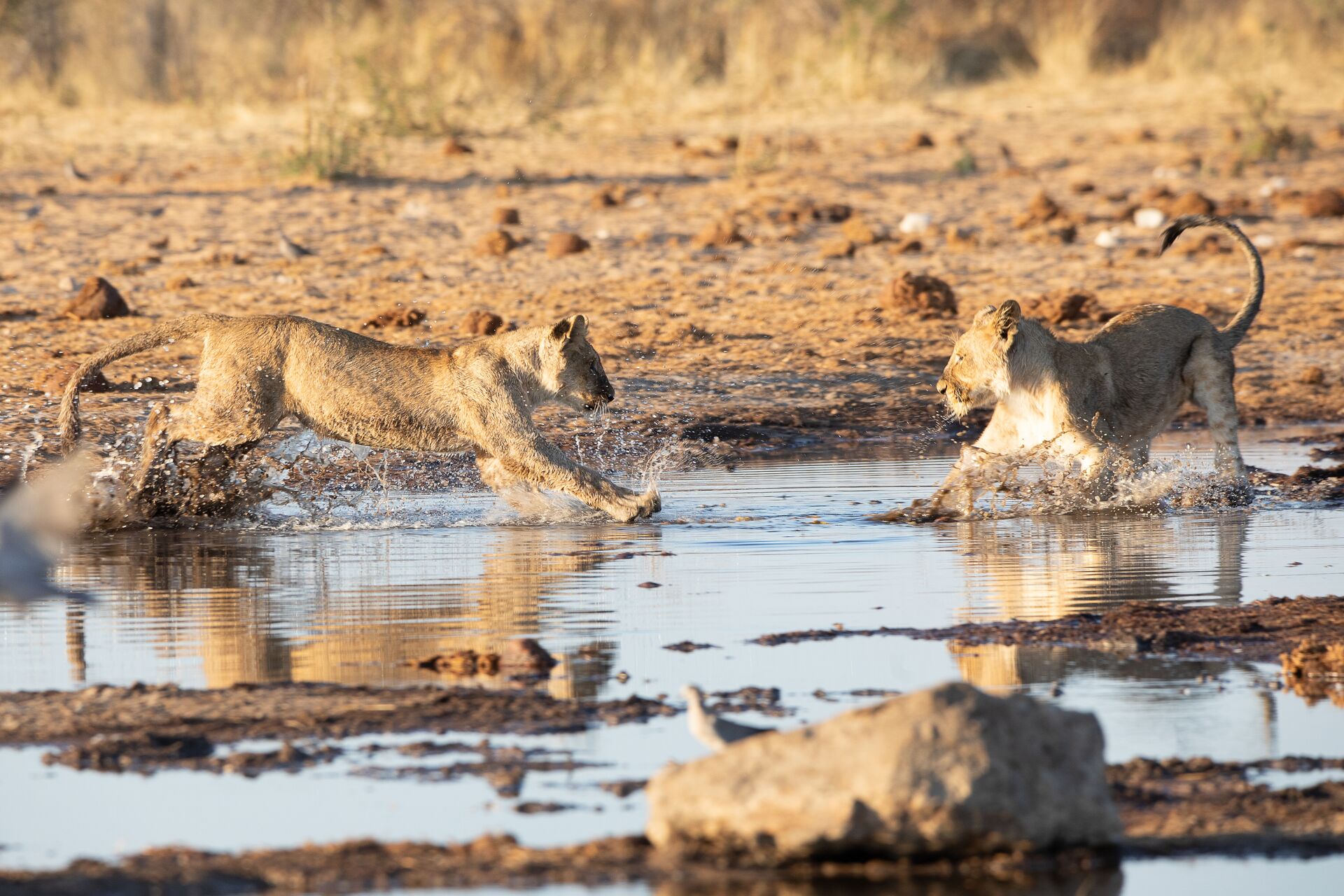
Rise bright and early this morning to set off on a full-day 4WD safari in Etosha National Park. Drive along the open plains and keep watch at the waterholes on the edge of the Etosha Pan where the wildlife gathers to drink. You might see elephants, lions, giraffes, zebras, wildebeest, rhinos and the endemic black-faced impala. Return to your accommodation in the late afternoon, where you can debrief about the day’s adventures with your group or just kick back and relax.
Day 5: Damaraland
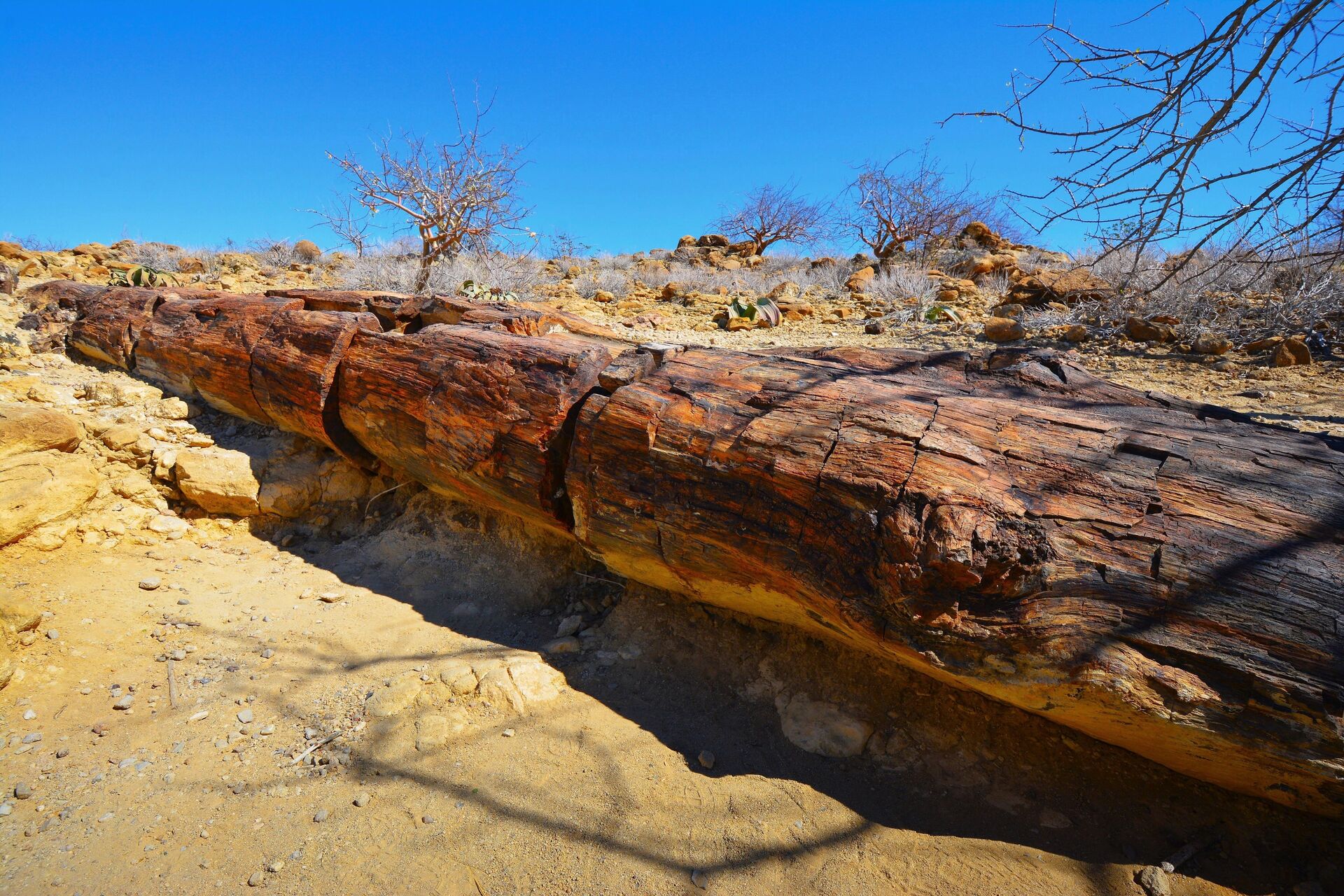
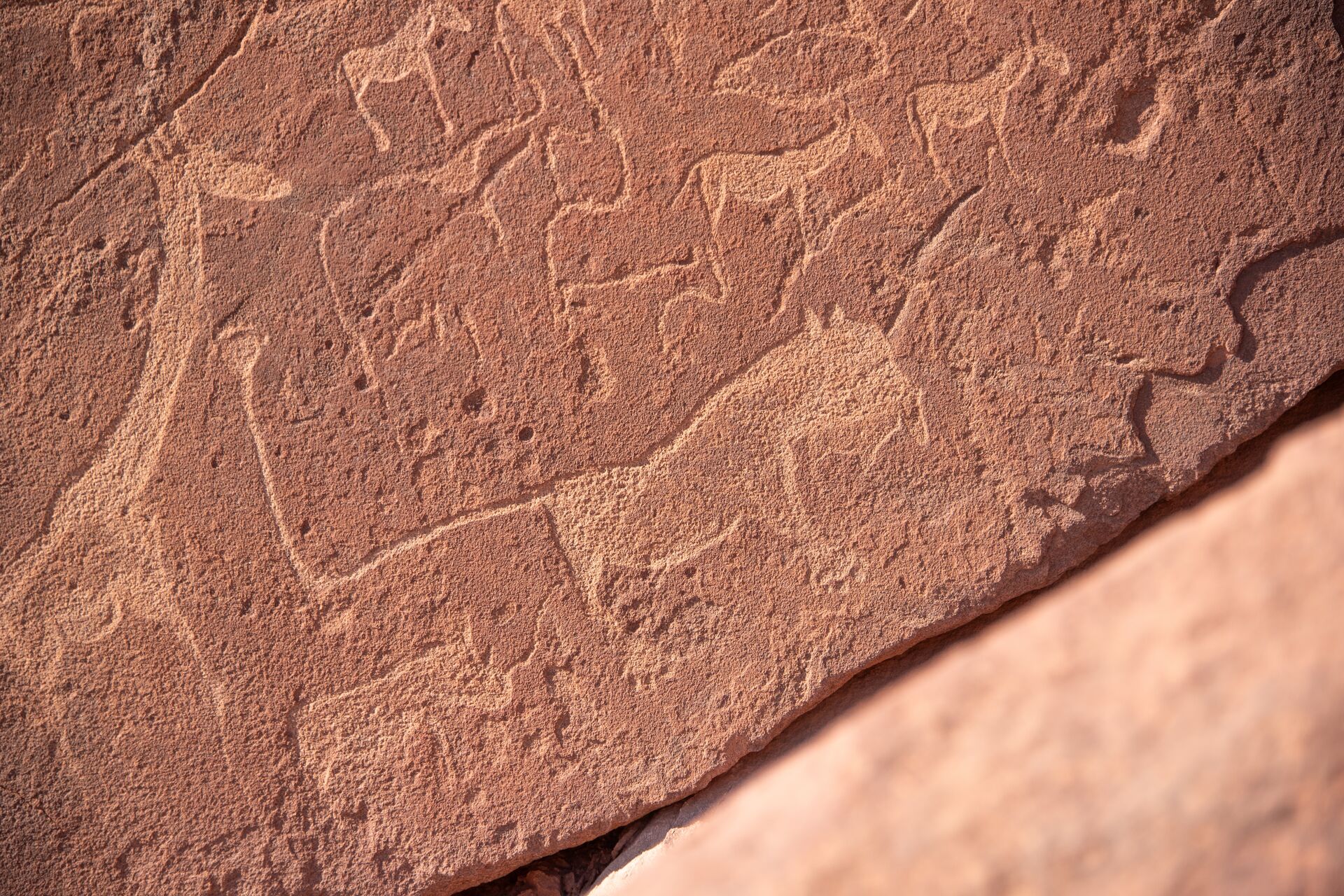
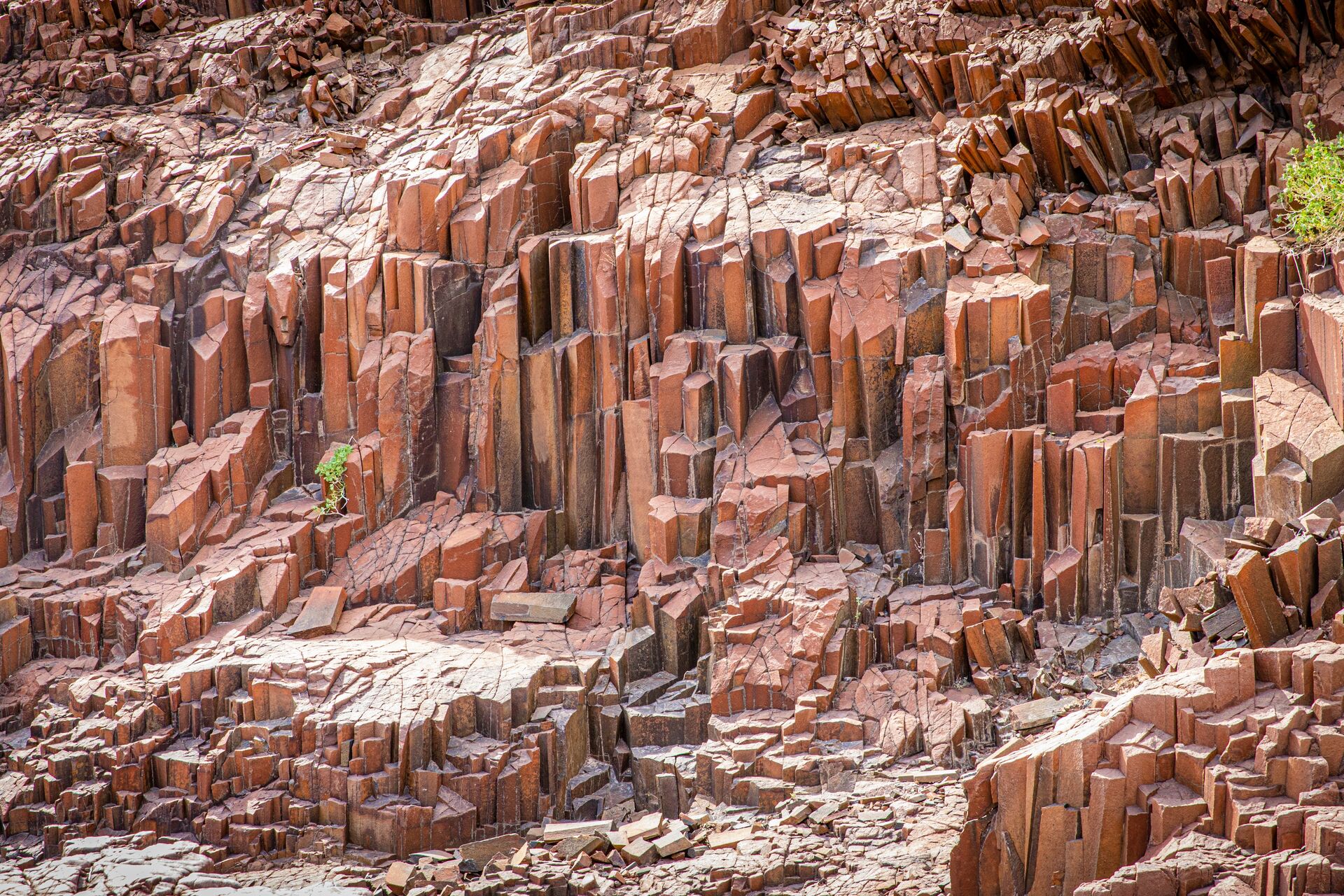
Travel to the mountainous region of Damaraland this morning. You’ll visit the UNESCO World Heritage-listed site of Twyfelfontein, home to one of the highest concentrations of petroglyphs in Africa. The carvings depict rhinos, footprints of both animals and humans and rock shelters, combining to create a record of hunter-gathering practices in this region dating back thousands of years. Continue to the Damara Living Museum to learn about Damara cultural traditions and crafts like blacksmithing, fire-making, singing and dancing. Then it’s on to one of Damaraland’s natural wonders – the Petrified Forest, where you can see a vast deposit of 280-million-year-old fossilised tree trunks. After, head to Khorixas, where you’ll spend the night.
Day 6: Uis
This morning, journey towards Brandberg Mountain – Namibia’s highest peak at an elevation of 2573 m. On the way, make a stop at a community conservancy where you’ll learn how locals are working to protect wildlife and conserve habitats. Continue towards Brandberg, where you’ll spend the night at a lodge.
Day 7: Swakopmund
Journey to the coast, making a stop at Spitzkoppe to take in the views of dramatic granite peaks rising from the desert. Then, continue to the coastal city of Swakopmund. Join your leader for an orientation walk to get your bearings, then the rest of your day is free. Maybe get together with your group for dinner – your leader will be ready with recommendations for restaurants where you can sample some fresh local seafood.
Day 8: Swakopmund
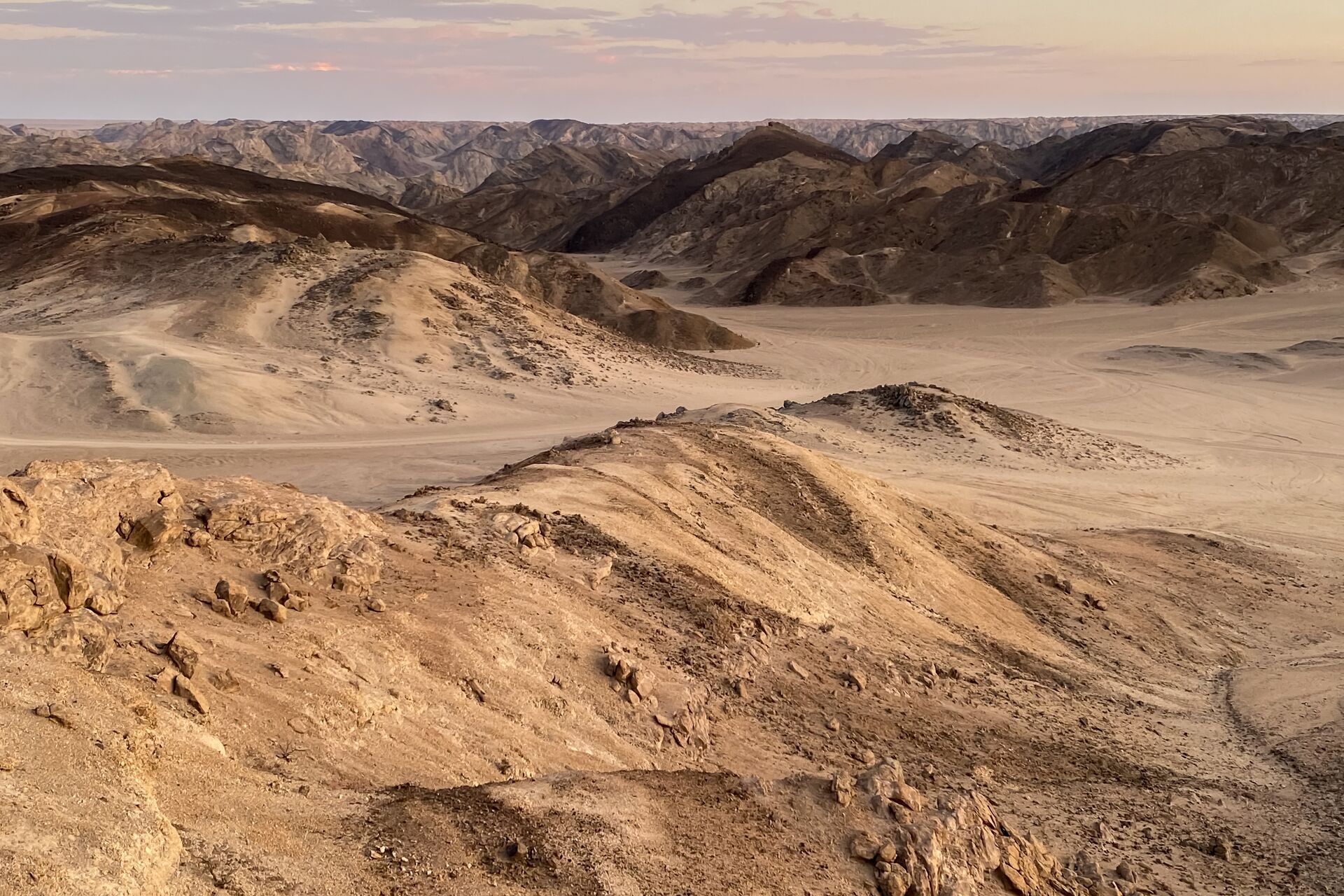
You have some free time to explore Swakopmund at your own pace today. Maybe visit the Swakopmund Museum to learn more about Namibia’s natural and cultural history, then wander past the town’s lighthouse to reach the waterfront and Mole Beach. With everything so close together, this a great area to explore on foot. Later, head into the Namib Desert to explore the Moon Landscape, named for its lunar-like appearance that’s been shaped over millions of years by erosion from the Swakop River. Take a walk through the rugged landscape before settling in for a picnic as the sun sets. Look up at the night sky for some stargazing before returning to Swakopmund.
Day 9: Sesriem
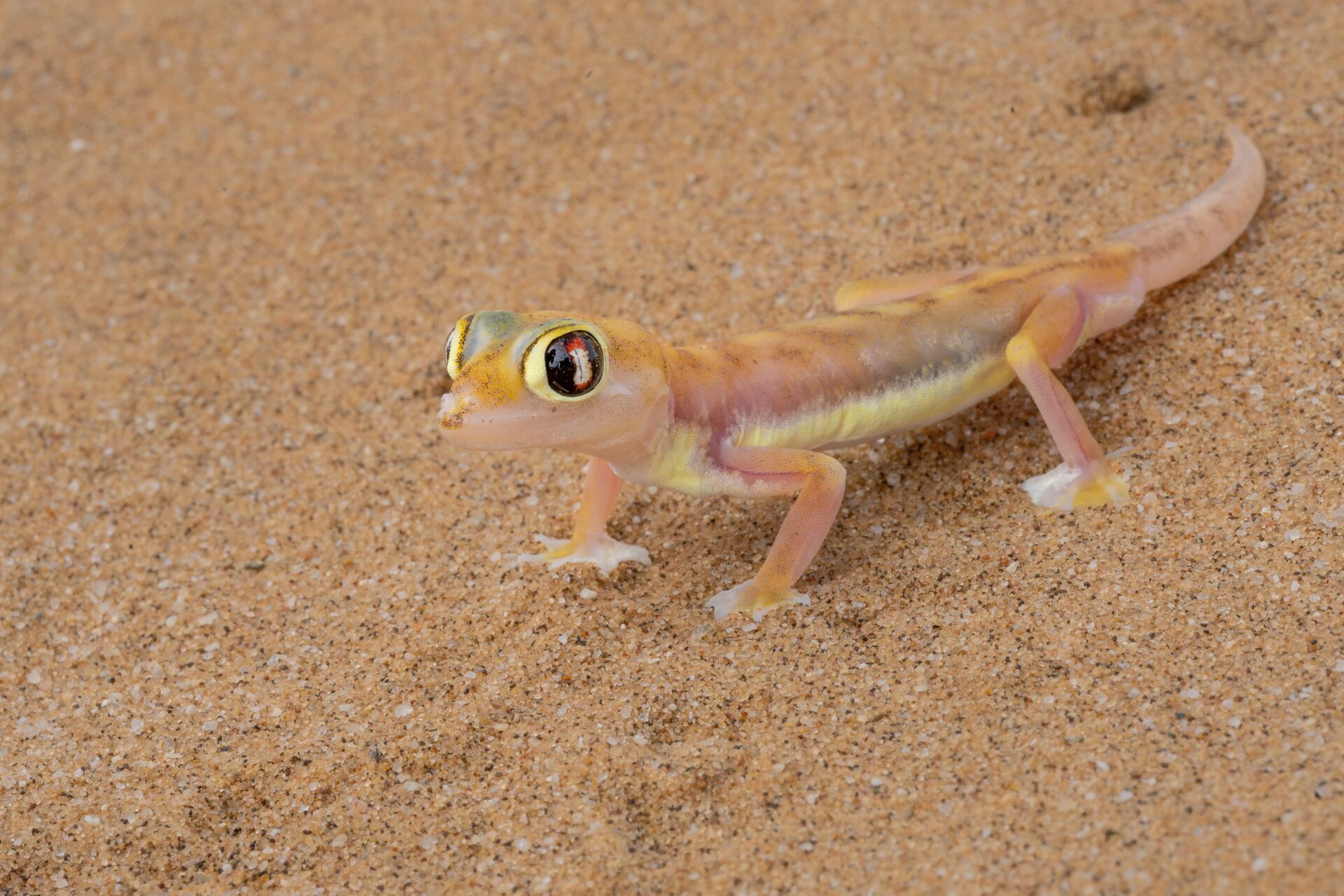
Head towards the sand dunes this morning for a guided Living Desert experience. Learn about the wildlife that calls the Namib Desert home and hear about how desert-adapted creatures survive in this seemingly inhospitable, harsh environment. Then, leave Swakopmund and journey south towards Sesriem. Along the way, you’ll stop at the small desert settlement of Solitaire, where you might like to try a slice of the famous apple pie from the local bakery. Continue to Sesriem – your base for exploring the landscapes of Sossusvlei tomorrow.
Day 10: Sesriem
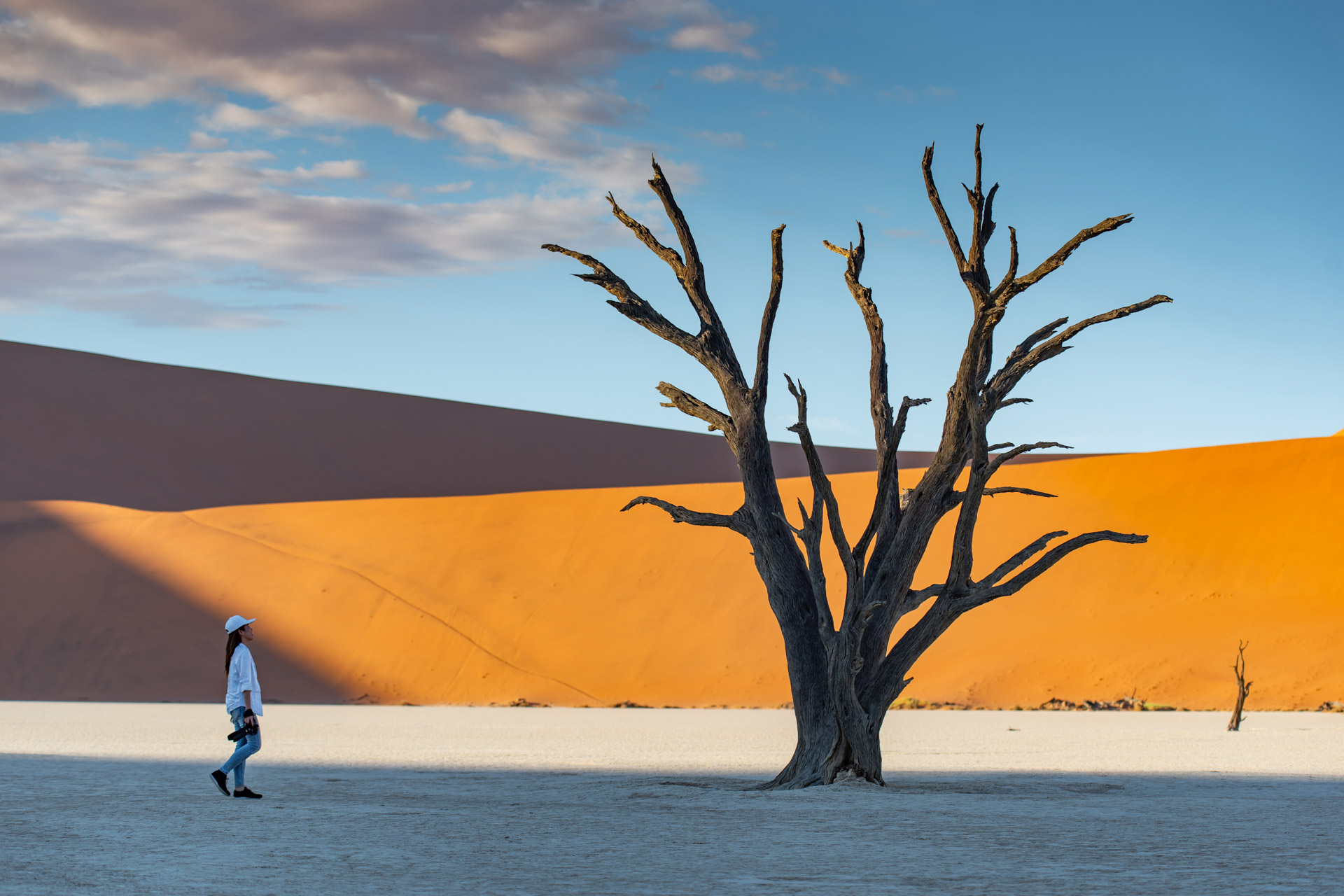
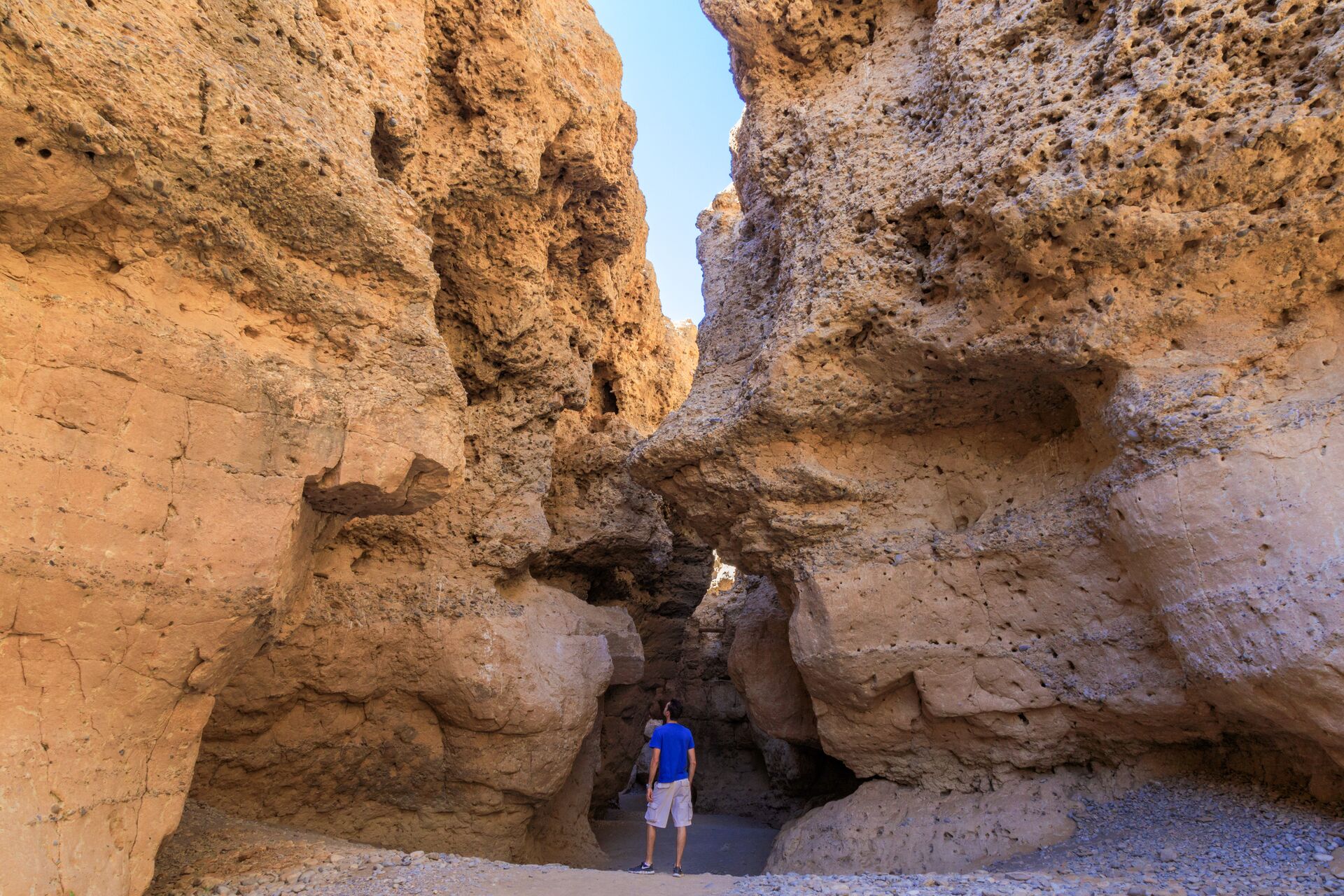
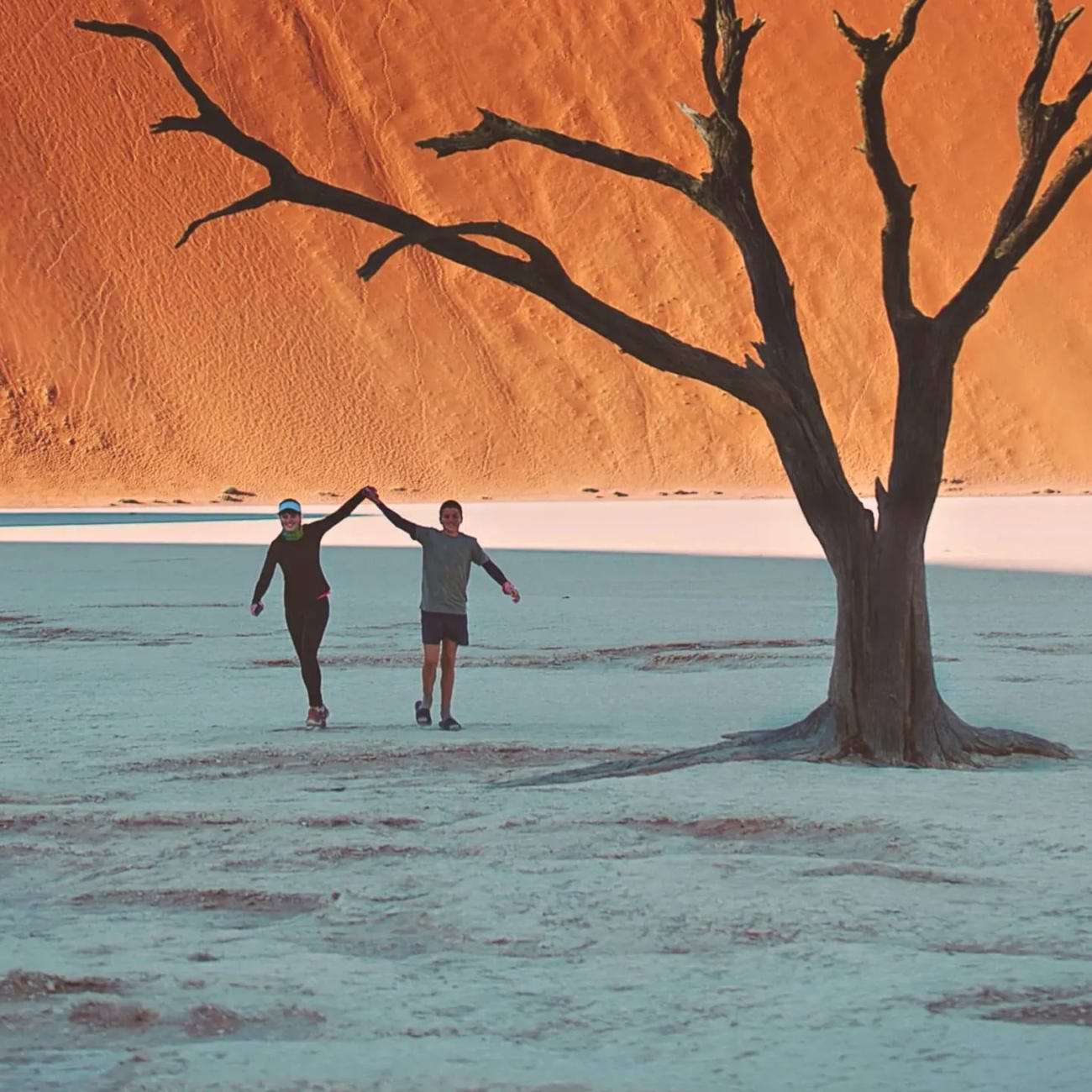
Spend today exploring the unforgettable landscapes of the Namib Desert. Travel to the Sossusvlei salt and clay pan and visit Deadvlei, where ancient camel thorn trees rise from a white clay pan surrounded by towering red dunes. Explore the area on foot, taking in some of the Namib’s most iconic desert scenery. Later, visit Sesriem Canyon, a narrow gorge carved into the rock by the Tsauchab River over millions of years. Walk into the canyon to see its layered rock walls and learn how water has shaped this arid landscape.
Day 11: Windhoek
Say goodbye to the Namib Desert this morning and travel back to Windhoek. When you arrive, join your leader for an orientation walk to see some of this capital city’s highlights. The rest of the day is free for you to relax or keep exploring at your own pace. You might like to head out for dinner with your group tonight to celebrate the end of your adventure. Ask your leader where to try popular local dishes like kapana (grilled meat) or potjiekos (a hearty meat and vegetable stew).
Day 12: Windhoek
With no further activities planned, your adventure comes to an end. If you’d like to extend your stay, just speak to your booking agent ahead of time.