Day 1: Kathmandu
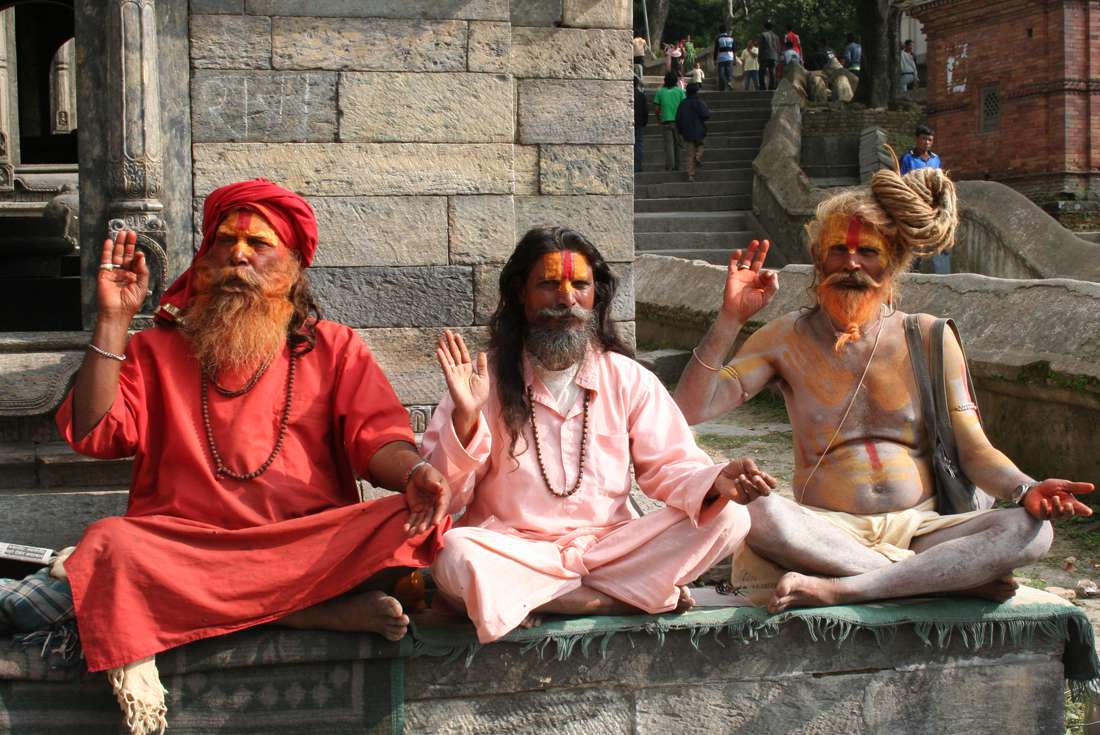
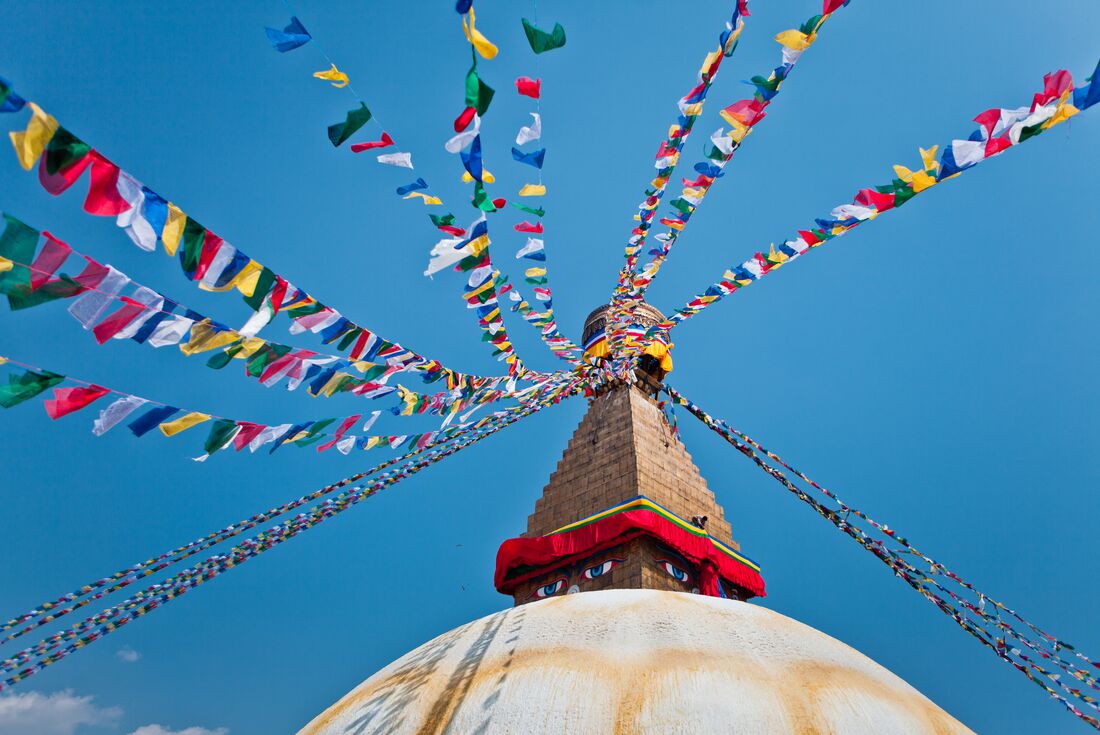
Namaste! Welcome to Nepal. Your adventure begins with a welcome meeting at 2 pm today. If you touch down early, there’s lots to do in Kathmandu. Maybe head out into the streets of Pashupatinath (home to markets, bazaars, holy men, monks, bicycles and sacred cows), climb to Kathmandu’s most important Buddhist shrine, Swayambhunath (also known as ‘the Monkey Temple’), or enjoy the atmosphere in Durbar Square. After your meeting, the evening is free, so you might like to try out one of Kathmandu’s many restaurants with your new travel companions.
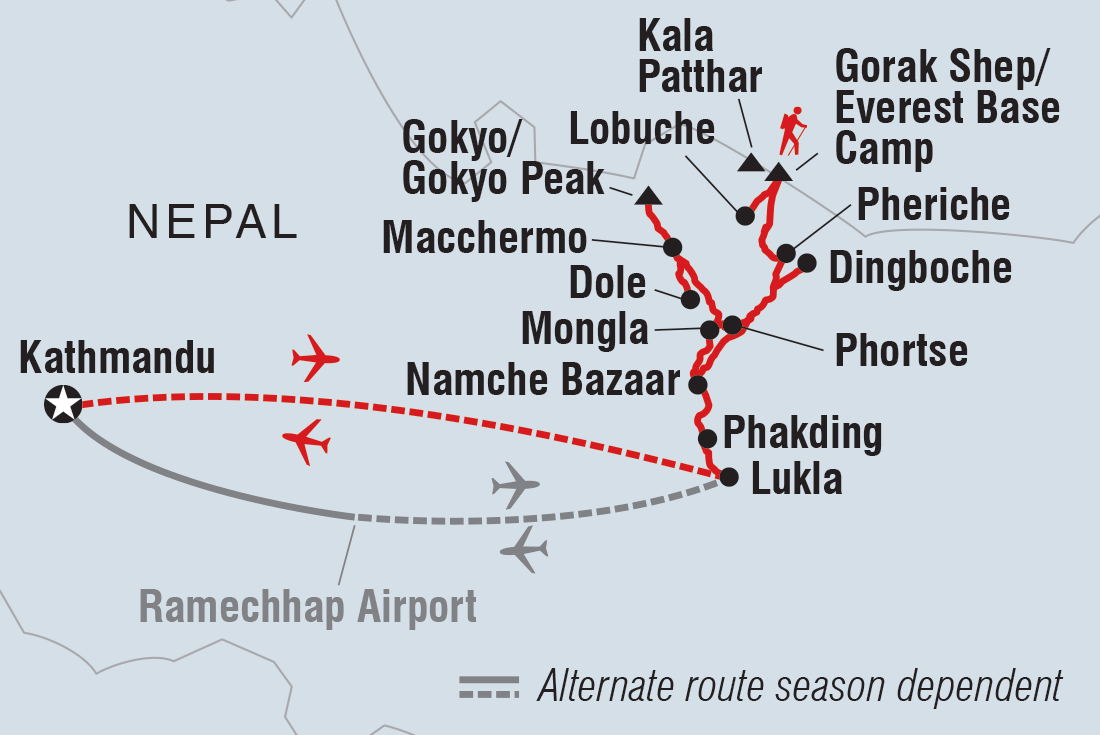
ALTERNATIVE ITINERARY IN THE CASE OF FLIGHT CANCELLATIONS
Weather conditions in the Himalayas can change rapidly, leading to flight cancellations and varied on-ground conditions. This means you need to be prepared for possible changes to your itinerary while you’re travelling. Flights between Kathmandu/Ramechhap and Lukla are particularly prone to delays.
If bad weather prevents fixed-wing aircraft flights from Kathmandu/Ramechhap to Lukla, the itinerary will be as follows:
Day 2 – We will attempt to fly as planned. If this flight is cancelled, we will return to our hotel in Kathmandu/Ramechhap for an additional night.
Day 3 to Day 6 – We will again attempt to fly, but if this flight is cancelled, we will endeavour to charter a helicopter for the group to fly to Lukla. This is reliant on availability of safety-audited helicopter operators and that the weather conditions don’t prevent helicopters taking off as well.
You will need to use your emergency funds to cover the cost of the chartered helicopter. The exact cost will depend on how many travellers are in your group and could be up to USD 500 per person. It is common practice for helicopter companies to charge varying prices, so you may pay different amounts to others on the flight.
If we reach Lukla on Day 6, we will pick up the planned itinerary to Everest Base Camp, with enough time to ascend safely, but we won’t be able to reach Gokyo Lakes.
Day 7 – If both fixed-wing planes and helicopters are unable to reach Lukla on Day 6, then on Day 7 we will return to Kathmandu. From there, we will trek to Annapurna Basecamp. While this trek doesn’t reach Everest Base Camp or Gokyo Lakes, our travellers have found it a highly enjoyable trek, with scenery of glaciers, mountain pastures and the Himalayas.
Day 2: Phakding (2610 m/8563 ft)
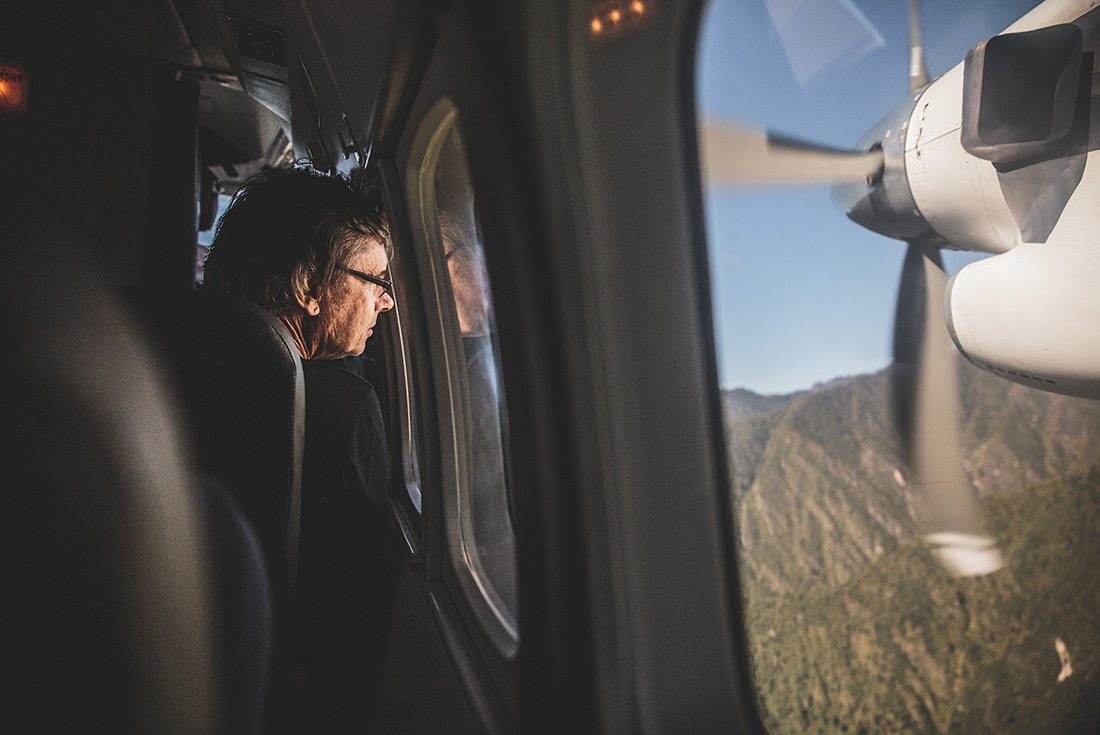
Early this morning you’ll board a plane for a quick journey from Kathmandu to Lukla (2827 m/9275 ft). This is no regular flight – you’ll be flying parallel to the giants of the Himalayas and, if the weather’s good, the views of the mountains bordering Nepal and China are amazing. Touch down on the airstrip, then it’s time to meet your porters and take some time to warm up with an exploration of the village of Lukla. After a quick safety talk, gear up and begin your trek to Phakding. You’ll descend towards the milky white waters of the Dudh Koshi River, where you’ll join the main trail to Namche Bazaar, located just above Chaunrikharka (2713 m/8901 ft). The walk is easy and after passing through the small village of Ghat (2550 m/8366 ft), it’s only a short walk to Phakding.
Day 3: Namche Bazaar (3440 m/11,286 ft)
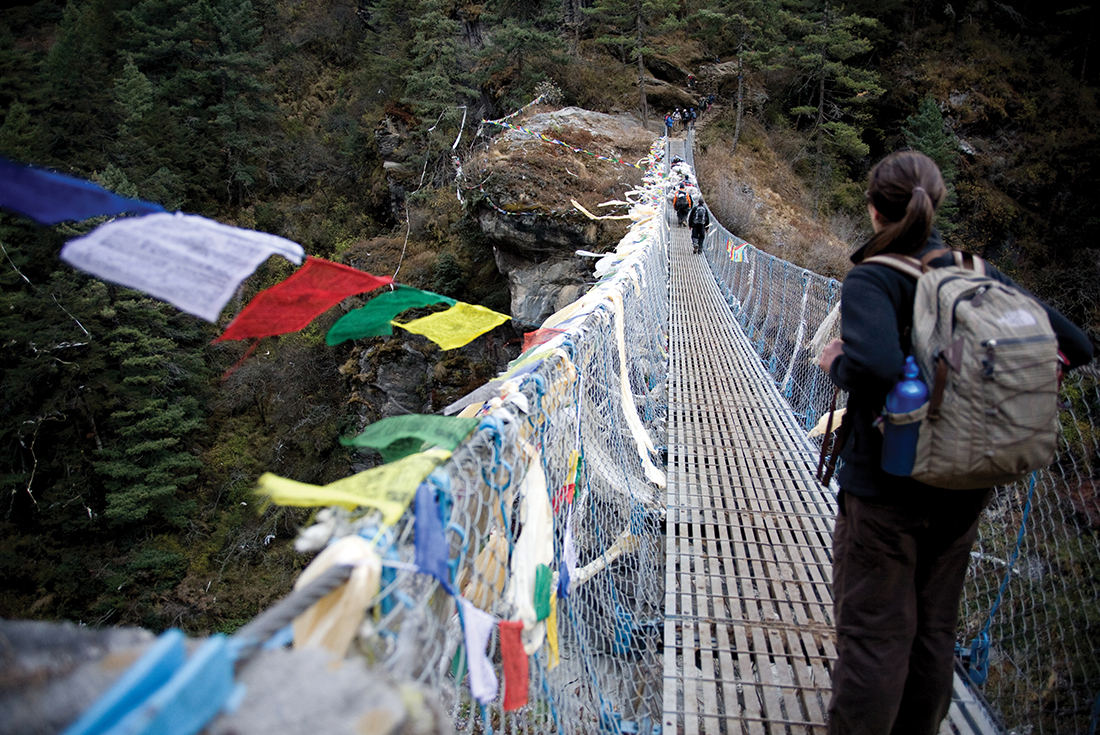
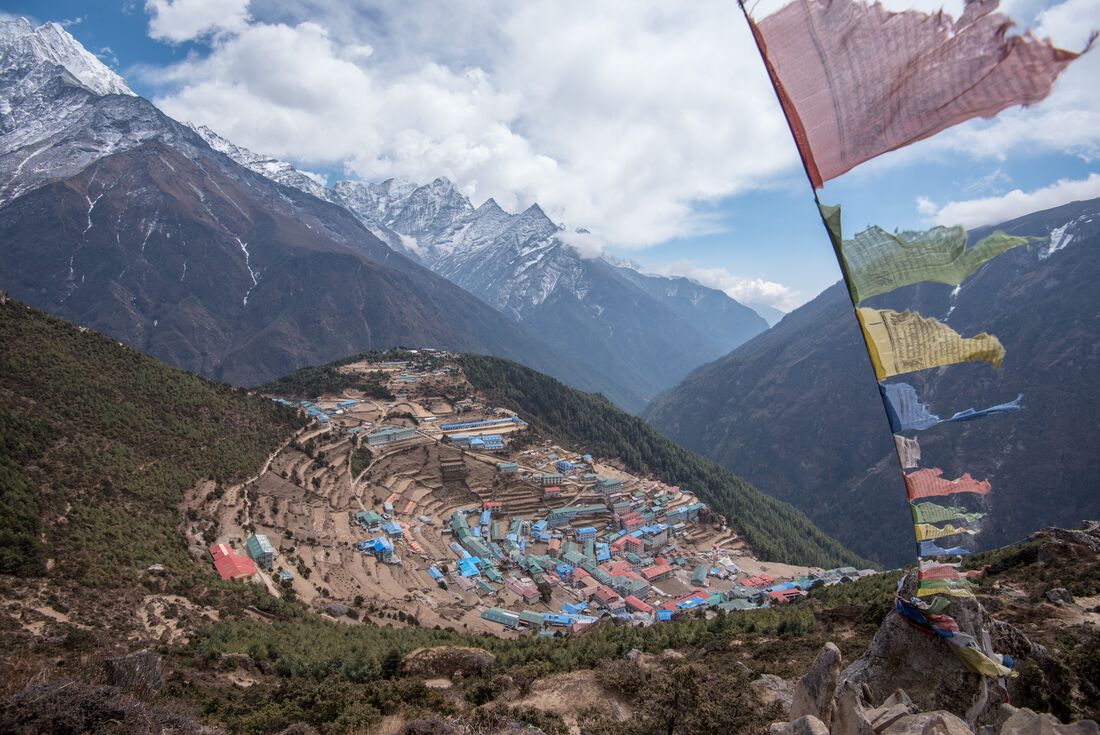
Today you’ll trek to Namche Bazaar, where you’ll spend two nights acclimatising to the altitude – and might even get your first look at Everest itself. From Phakding, you’ll begin to head up the valley. The trail, lined with blue pine forest, follows the river valley and is especially spectacular in spring when the rhododendrons are in bloom. Cross the Dudh Koshi River at Benkar, and look up 6000 m (19,685 ft) to see the peaks of snow-capped Kusum Kanguru (6369 m/20,896 ft) and Thamserku (6623 m/21,729 ft). Press on to Monjo (2835 m/9302 ft), a good place to break for lunch. From here the walk starts to get a little tougher, with a steep ascent to Namche Bazaar. Enter the national park, cross the river through the village of Jorsale (2805 m/9203 ft) and then continue upstream. Cross the spectacular Hillary Bridge and begin the ascent to Namche Bazaar. Get your camera out, as on a clear day you’ll get your first glimpse of the peaks of Everest, Lhotse, Nuptse and Taweche. Namche will be your last chance to check your equipment and hire any additional gear for the high altitudes from Dingboche onwards.
Day 4: Namche Bazaar (3440 m/11,286 ft)
Tonight, you’ll stay at Namche Bazaar again so that you can properly acclimatise to the altitude. One of the best ways to do this is to take a strenuous walk up to a high altitude, then come back down to sleep. Your optional (but recommended) walk today will take you to the Tenzing Norgay Memorial and Sagarmatha National Park Museum above the village. If the conditions are right, this stunning vista includes a panorama of the Khumbu peaks and Everest. The National Park Museum is also home to interesting displays about Sherpa lifestyle and culture, and the local flora and fauna. Then, continue your hike to higher elevations with a visit to Sagarmatha Next, who support local communities to create and implement a sustainable waste-handling system in this region. Return to town and enjoy a free afternoon and evening to rest. While you’re here, be sure to stock up on any extra supplies you still need.
Day 5: Mongla (3970 m/13,025 ft)
From Namche, ascend to the Shyanboche viewpoint, then have lunch in Khumjung – the largest village in the region. Here, you can feast on dhal bhat and noodles before visiting the Khumjung Buddhist Monastery. The sacred rocky peak of Khumbilya (5761 m/18,901 ft) towers above and is home to the guardian goddess of the region, often depicted in religious paintings (or thangkas) as a white-faced figure on a white horse. Follow the trail as it winds around Khumbilya's lower slopes, passing through beautiful birch forest and climbing from treeless, grassy slopes to a stupa on a rocky ridge (3992 m/13,097 ft). Once again, the views of the surrounding mountains are magnificent. Phortse can be seen across the valley – this picturesque village is set in a patchwork of stone-walled fields. You’ll stay overnight at the cluster of lodges on the saddle, known as Mongla.
Day 6: Dole (4038 m/13,248 ft)
The altitude will start climbing now and can make things tough, so be sure to take it easy over the next three days and don’t push yourself too hard. From Mongla, descend on a series of switchback trails to the Dudh Koshi River at Phortse Bridge. The trail to Gokyo can be deceptive and some can ascend too quickly, but you’ll be able to take your time. Leaving Phortse Bridge, you’ll ascend steeply at first, then contour high above the valley, taking in excellent views of Kantega, Thamserku and Ama Dablam (6856 m/22,493 ft). About an hour's walk from Phortse Bridge, you’ll get your first views of the mammoth peak of Cho Oyo (8153 m/26,749 ft) at the head of the valley. Trek beyond the tree line and pass some imposing waterfalls on the way to the yak-herding settlements of Tongba (4015 m/13,173 ft) and Gyele (4050 m/13,287 ft). From here, it’s a short distance to Dole, where you’ll spend the night. You’ll also explore the upper Dole Valley while you’re here, returning via a high ridge above the lodge to take photos of Cho Oyo and Gyachung Kang (7922 m/25,991 ft) to the north, and Taweche (6542 m/21,463 ft) and Cholatse (6440 m/21,129 ft) across the valley to the east.
Day 7: Machhermo (4465 m/14,649 ft)
You might come to appreciate the term ‘short walking day.’ Today will be just that, with a climb out of the small Dole Valley before a gradual ascent up the Dudh Koshi Valley, high above the river. Though the walk is quite easy, you’ll definitely start to feel the effects of the altitude. The barren alpine scenery, with only small clusters of scrub juniper, is a stark contrast to the snowy-white peaks and deep-blue skies. After a couple of hours, you’ll arrive at Luza (4360 m/14,304 ft), then you’ll reach the lodge at Machhermo. If you’re still feeling energetic after lunch, there’s an option to take the excursion across rocky rubble to the base of Kyajo Ri (6168 m/20,236 ft) and Machhermo Peak (6073 m/19,925 ft).
Day 8: Gokyo (4720 m/15,486 ft)
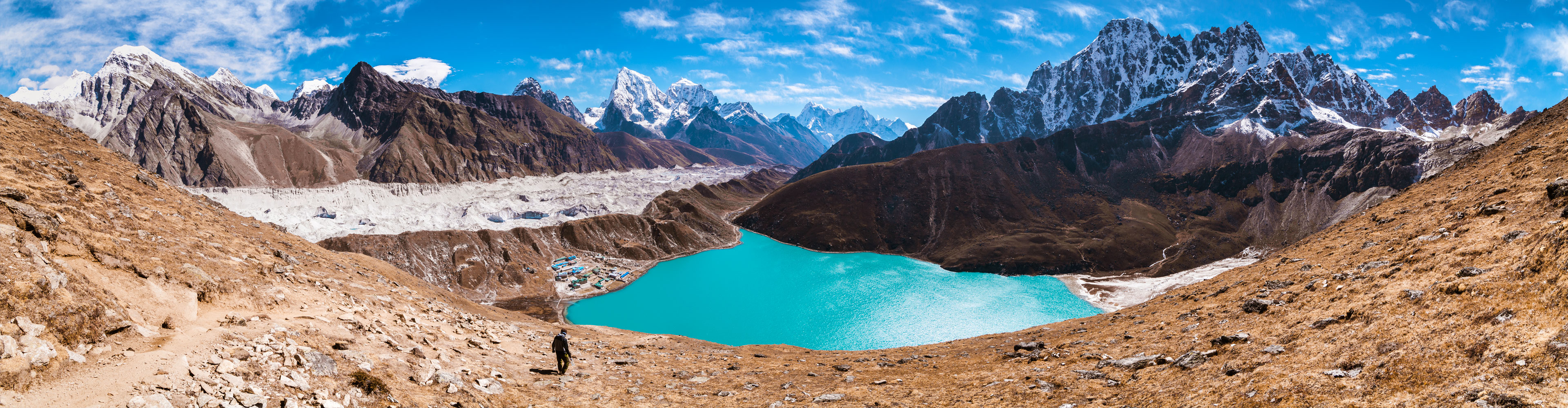
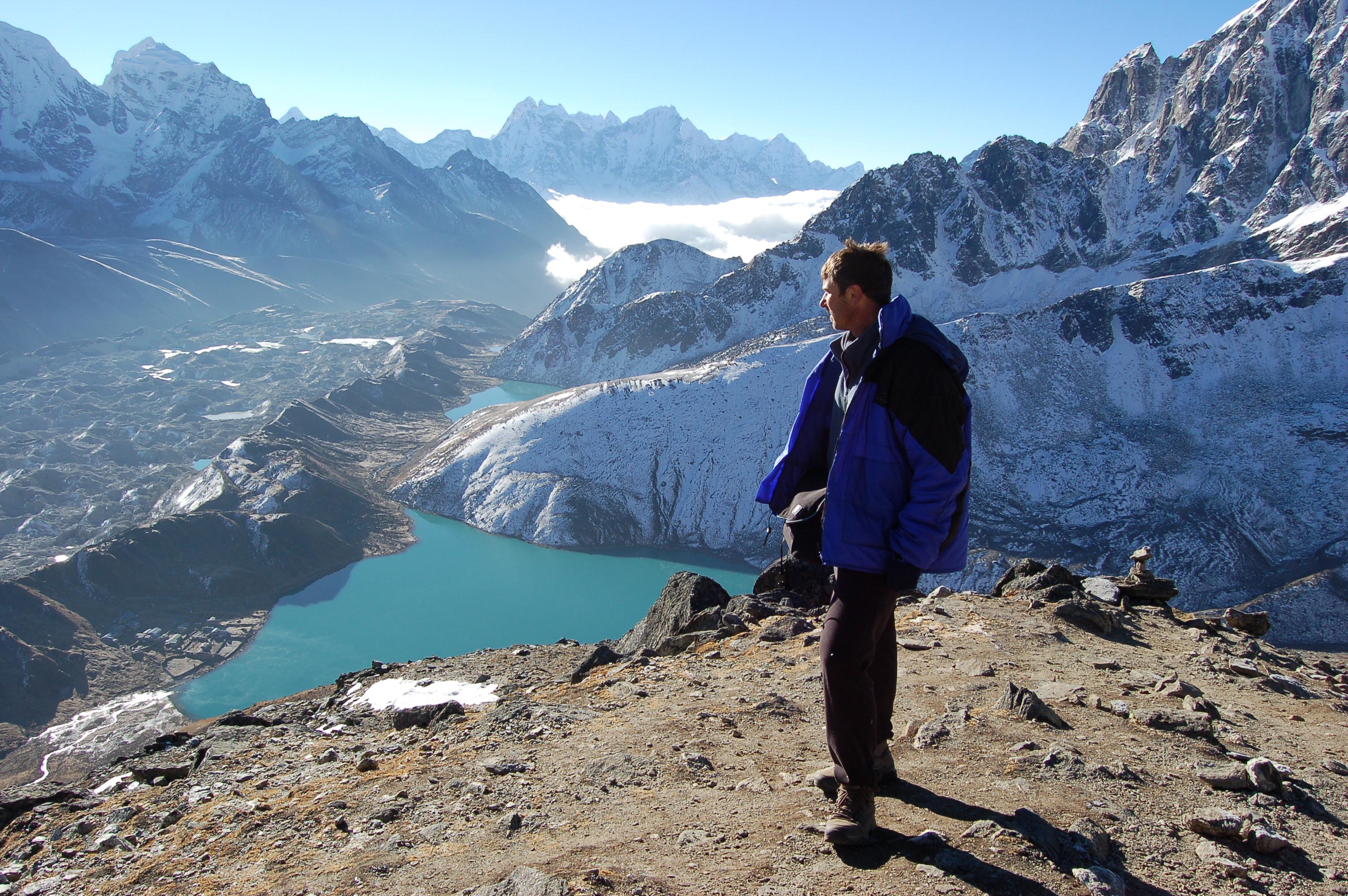
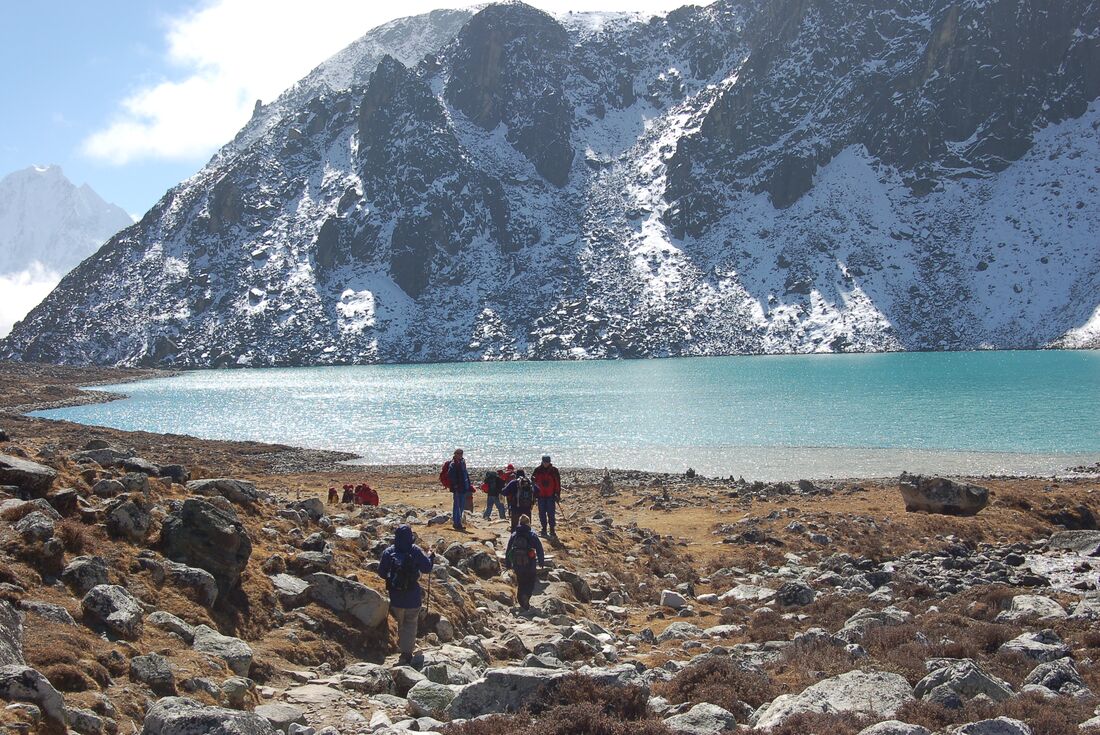
After your view of the Gokyo Lakes today, you'll need a new word to describe the colour blue. A short, steep climb leads from the Machhermo Valley on to the steep grassy slopes of the Dudh Koshi Valley. Keep an eye open for the colourful Tibetan snow cocks, often found in this area. The valley widens as you pass through Pangka (4390 m/14,403 ft) and on to the jumbled moraines (glacier debris) of Ngozumpa Glacier – the largest in Nepal and the source of the Dudh Koshi River. Climb a steep, rocky trail, to the western side of the glacier to reach a small lake at the head of a wide valley. Then, pass a larger lake at Longpongav (4690 m/15,387 ft), before following the lateral moraines to the third lake at Gokyo (4750 m/15,584 ft) – there are a number of stone dwellings here, surrounded by stone-walled yak pastures. Today’s lodge is located close to the lake and, if there are no clouds around, the sunroom will be lovely and warm in the afternoon. For those with energy to spare, it’s worth ascending the ridge at the back of Gokyo for views down to the mighty Ngozumpa Glacier.
Day 9: Machhermo (4465 m/14,649 ft)
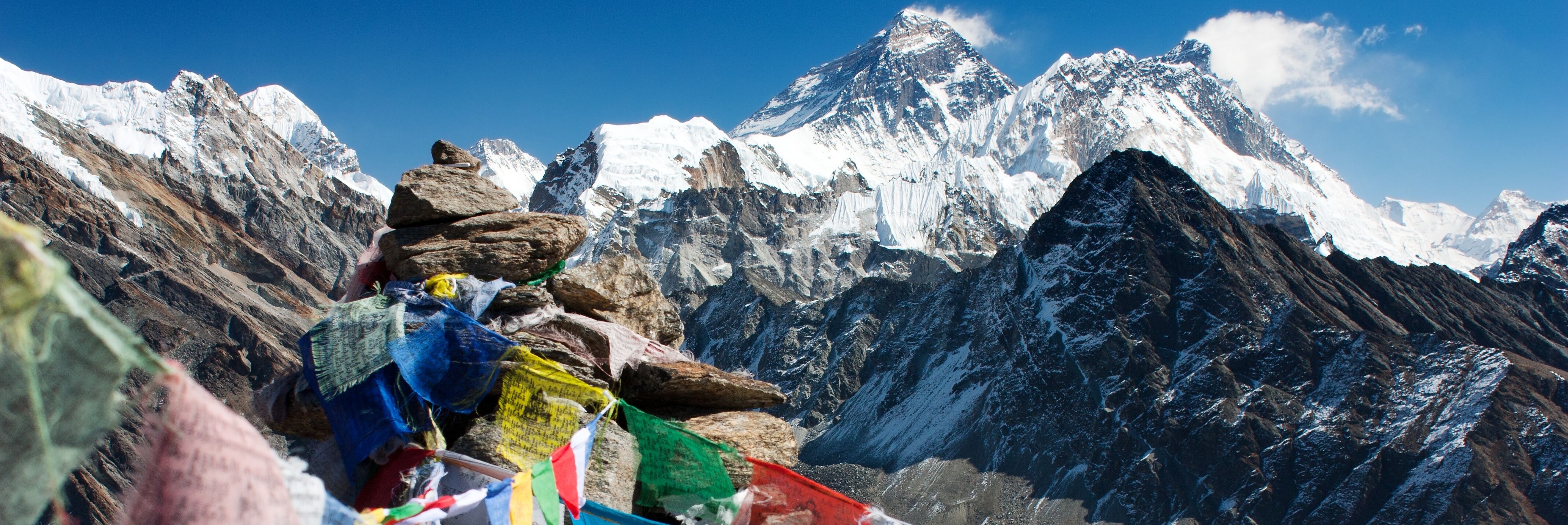
Get up early for the climb up Gokyo Peak, which has one of the best panoramas in the Khumbu region. It’s a straightforward but steep climb, and it can be tiring due to the altitude. View four peaks that are 8000 m or higher – Everest (8848 m/29,029 ft), Cho-Oyo (8153 m/26,749 ft), Lhotse (8511 m/27,923 ft) and Makalu (8481 m/27,825 ft) – and spot countless other peaks like Gyachung Kang (7,922 m/25,991 ft) to the east of Cho-Oyo, Cholatse (6,440 m/21,129 ft), Taweche (6,542 m/21,463 ft) and Kangchung (6,103 m/20,023 ft). There’s also a bird's-eye view of the Gokyo Lakes and the huge, creaking Ngozumpa Glacier, now cutting halfway across the world and snaking its way down the valley. Descend back to Gokyo for a late breakfast and then retrace your steps back to the snout of the glacier back to Machhermo. You might be surprised how easily and quickly you’ll cover the return route – that’s acclimatisation!
Day 10: Phortse (3810 m/12,500 ft)
Today will be something special, asnot many groups stop in Phortse – this traditional Sherpa village offers insight into their life and culture. A leisurely start to the day will wind you down the valley to Dole, where you’ll enter the forest to continue the descent to Phortse Bridge. Keep an eye open for musk deer, often seen on this section of the trail. Stop for lunch, then branch off the main trail to Namche, crossing the Dudh Koshi and ascending to the village of Phortse, where few trekkers pass on their Everest adventure. The dramatic mountain views and peace of the village make this one of the highlights of the trek! You’ll be almost completely above the tree line, so the sunsets make for excellent photos (and memories).
Day 11: Dingboche (4410 m/14,469 ft)
Head across a ridge before descending on an exposed trail to the Imja Khola. Keep an eye open for Himalayan tahr, often seen perched on the crags high above the trail. Join the trail coming from Thyangboche via the suspension bridge, then gradually climb to the village of Pangboche, where the peak of Ama Dablam dominates the skyline. Have lunch here and, if it’s open, see the beautiful monastery that once housed (what was claimed as) the hand and scalp of a yeti. After lunch, follow the trail high above the Imja Khola, passing the teahouses at Orsho, before again crossing the Imja Khola and old glacial moraines to a lodge in Dingboche. Here, you’ll find a patchwork of small fields enclosed by the stone walls that protect crops from cold winds. The scenery is once again spectacular, and although Everest will be hidden behind the Lhotse-Nuptse Ridge, the huge peaks that tower above the valley are incredible. If the weather’s right, there will be a gorgeous sunset illuminating the peaks – Ama Dablam, the south face of Lhotse to the north and Island Peak in the centre of the valley.
Day 12: Lobuche (4910 m/16,109 ft)
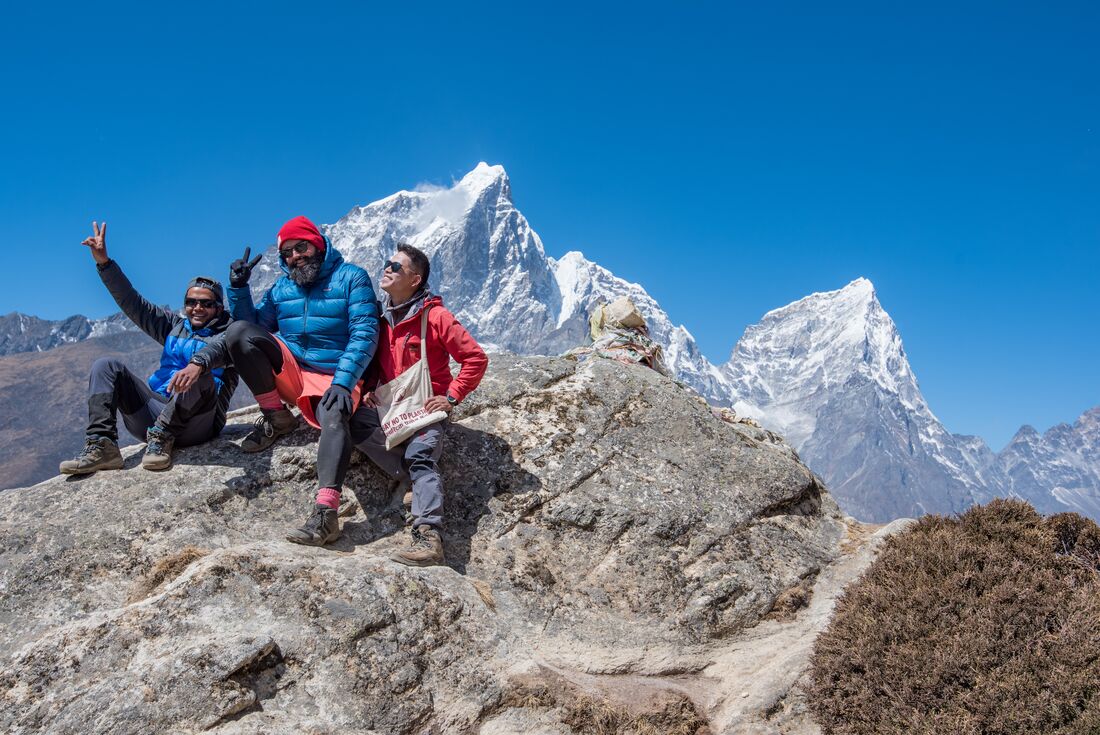
From Dingboche, ascend the small ridge behind the village above the Pheriche Valley. From the stupa at the top, Taweche and Cholatse (6440 m/21,129 ft) make for a striking scene as they seem to lean forwards from across the valley in the west. To the north, Lobuje Peak (6119 m/20,075 ft) and the snowfields of the Cho La are the kings of the skyline. The walking will now be fairly flat on wide-open fields but remember that there’s no rush – take your time and ensure you’re well hydrated. Late in the morning you will cross the Khumbu Khola at Dughla and take a light lunch at the foot of the huge terminal moraines of the Khumbu Glacier flowing off Everest. In the afternoon, there will be a steep climb on a rocky trail to the top of the moraines. On the crest of the ridge, you’ll pass a line of memorial cairns (stacks of stones), built in memory of the Sherpas and climbers who have died on various Everest expeditions over the last 50 or so years. From here, the view is jaw-dropping, with Pumori (7145 m/23,442 ft), Lingtren (6697 m/21,972 ft), Khumbutse (6623 m/21,729 ft), and across the border in Tibet, Changtse (7550 m/24,770 ft), surrounding you. Follow the valley stream to the lodge at Lobuche, arriving in the early afternoon. Tomorrow, you conquer Everest Base Camp.
Day 13: Gorak Shep/Everest Base Camp (5140 m/16,864 ft)
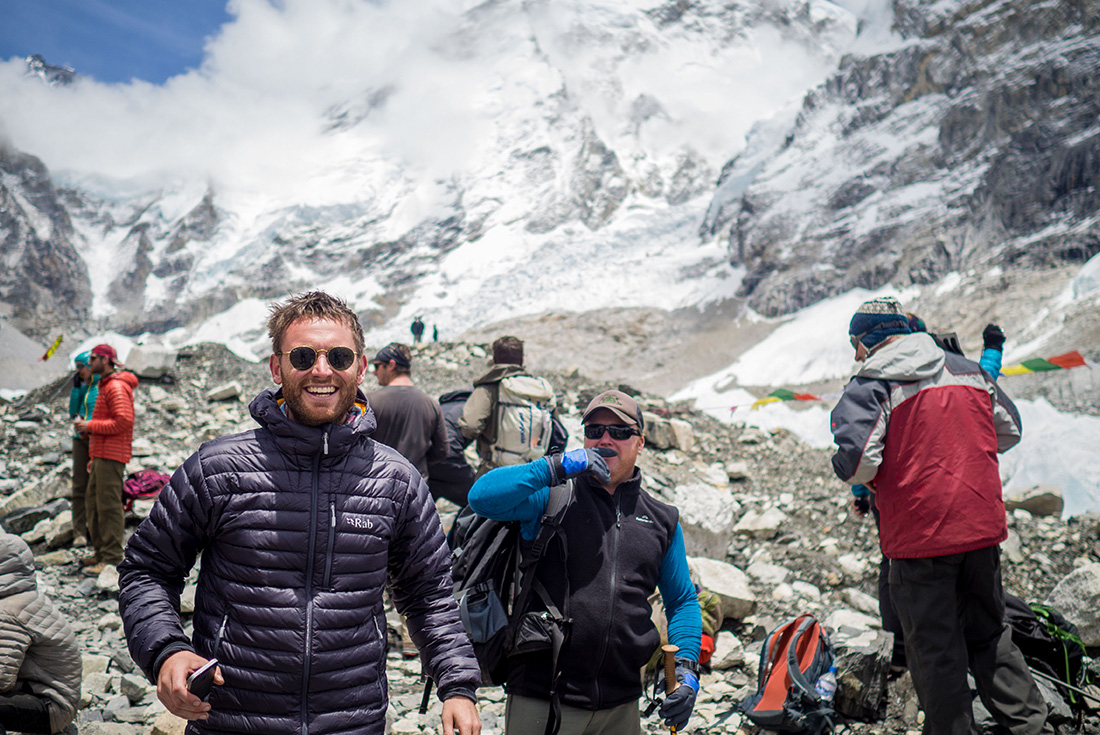
This is the big one, the day of Everest Base Camp! From Lobuche, follow the broad valley that runs parallel to Khumbu Glacier, with a gradual ascent to build the slow, steady rhythm required when walking at high altitude. When you reach the moraines of Changri Nup Glacier, make a series of small ascents and descents over a rocky trail lined with cairns that eventually leads to the glacial sands of Gorak Shep (5160 m/16,929 ft). Now’s the time to grab a quick bite, gear up appropriately and then head off towards Everest Base Camp. The trek can be achieved in around 3 hours, and if trekking in the popular climbing period of March to May, you’ll almost certainly encounter yaks and porters supplying food and equipment to expedition groups. You won’t actually get views of Mount Everest from Base Camp, but you are able to see the glaciers, lakes, caves and the notorious Everest Ice Fall that flows from the Western Cwm. The return journey from Base Camp to Gorak Shep takes the same amount of time. You’ll have an early dinner, so that you can get up early the next day for views of the Himalayan giants from Kala Patar.
Day 14: Kala Pattar/Pheriche (4240 m/13,191 ft)
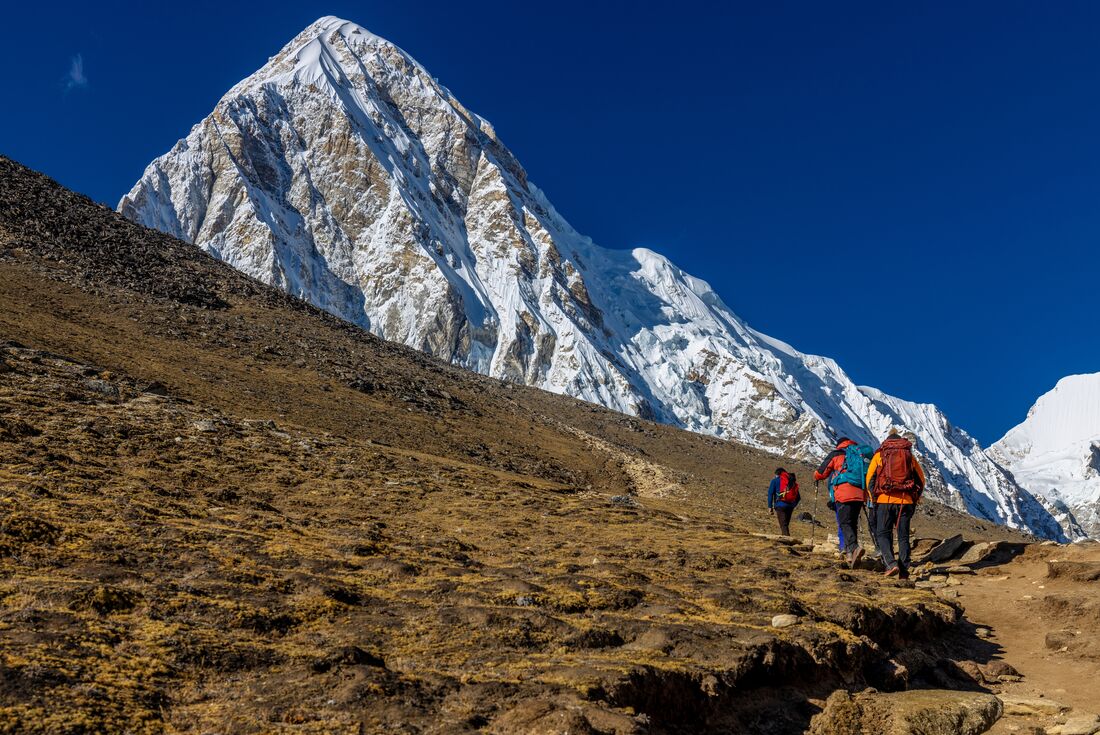
This morning, enjoy breakfast at the highest-altitude teahouse in the world before setting out to see some of the Himalayas’ most recognisable sights. Get a jumpstart to avoid the early-morning clouds and trek to Kala Pattar (5545 m/18,192 ft) to witness the best views of Everest. The ascent is quite steep and made more difficult because of the altitude, so start very slowly and try to ascend at a steady rhythmic pace. Kala Patar is the rocky hilltop below Pumori, and Nuptse, Changtse, Ama Dablam, Taweche, Kantega and Everest – they’re all here. About 3 km (1.8 mi) away and some 200 m (656 ft) below, the area of Everest Base Camp can be seen in a bowl at the bottom of the Khumbu Ice Fall. Spend as long as you like to savour an extra-special moment, then it’s all downhill from here – the descent to Gorak Shep is easy. When you arrive back at the lodge, have a quick drink and head off to the rooms to pack your kit bags while breakfast is being prepared. Then, set off to Lobuche and Thugla, where you’ll stop for lunch. After, cross the Khumbu Khola and head down the valley below Cholatse to Pheriche, where you’ll stop for the night.Trek Distance: 4 Kilometres
Trek duration: Approximately 3 hours
Gorakshep – Pheriche (4240m / 13911ft) :
Trek Distance: 12 Kilometres
Trek duration: Approximately 5 - 6 hours
Day 15: Namche Bazaar (3440 m/11,286 ft)
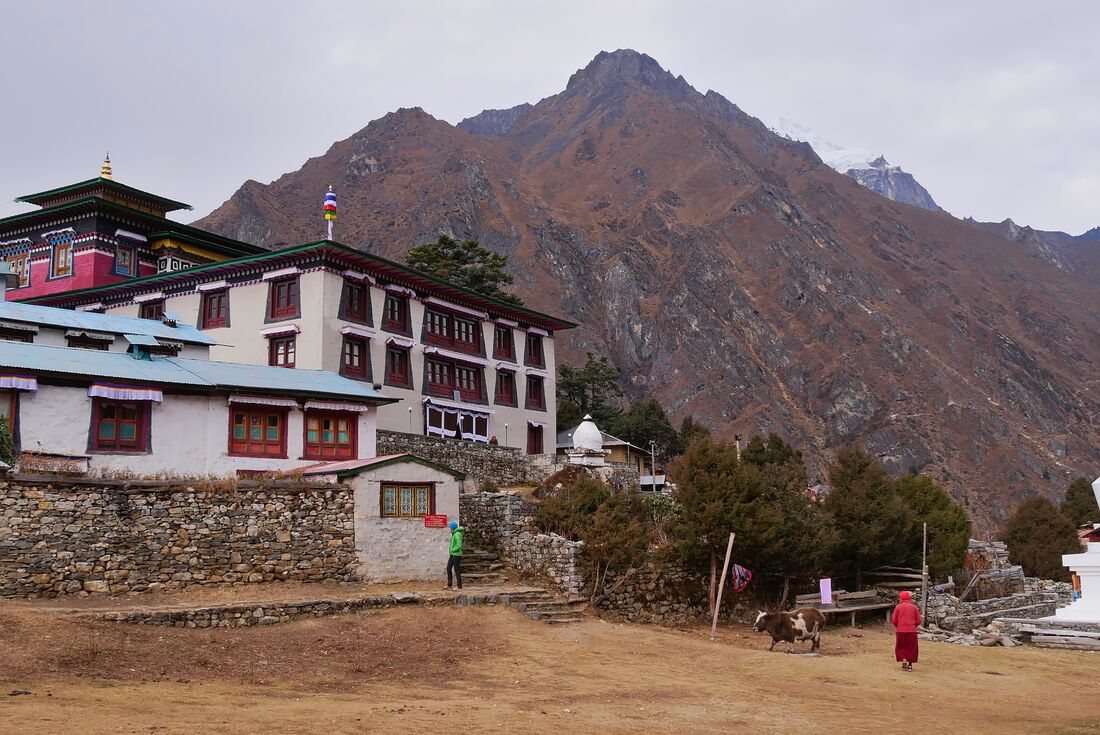
From Pheriche, cross the Khumbu Khola River and ascend a short steep trail to the top of a small ridge for great views of Imja Valley, Ama Dablam and Kantega. Descend through the small settlements at Orsho and Shomare before passing through Lower Pangboche. Here you’ll reach the suspension bridge over the Imja Khola River, then ascend back to Thyangboche to visit the monastery. According to legend, Lama Sange Dorjee, who came from Tibet’s Rongphu Monastery, founded Thyangboche Monastery in the 17th century. Thyangboche was destroyed by an earthquake in 1933, rebuilt and again badly damaged by a fire in 1989. Construction of the present monastery was completed in 1992. Spend a bit of time visiting the monastery and the nearby museum. In the afternoon, descend steeply through beautiful forest of juniper, rhododendron and fir to Phunkitenga. After a welcome break and perhaps a cup of tea, cross the Dudh Koshi River and ascend to Trashinga. From here, the trail contours high above the valley through Shanasa and on to Namche Bazaar, where you’ll spend the night.
Day 16: Phakding (2610 m/8563 ft)
Take some time to enjoy your final opportunity to visit the shops in Namche Bazaar, before descending steeply down to the large Hillary Bridge over the Dudh Koshi River. You’ll follow the trail through Jorsale and back to Monjo, where you’ll stop for lunch. This afternoon, make the short walk via Benkar through blue pine and rhododendron forest, with great views of Kusum Kangaru, back to the lodge in Phakding.
Day 17: Lukla (2840 m/9318 ft)
You’ve done it – your last day of trekking! It’s only a short walk in the valley before making the final climb up to the airstrip at Lukla, where you’ll say goodbye to your crew. Celebrate with a hot shower and a few drinks with your group before flying back to Kathmandu tomorrow morning.
Day 18: Kathmandu
Weather permitting, take the short flight from Lukla to Kathmandu this morning. Return to your accommodation and then enjoy some free time during the afternoon for further sightseeing or shopping. Located in the south of the city, Patan is also worth a visit with its own Durbar Square full of historic structures and statues of past kings. This evening, it’s time to celebrate with an included dinner, while you relax your weary legs with your travelling companions and newfound friends.
Day 19: Kathmandu
Say ‘dhanyabad’ for memories that’ll last a lifetime. There are no activities planned for today and you may depart the hotel at any time. If you'd like to stay longer, just speak to your booking agent.